

The design of a rotary valve is tailored to suit the specific characteristics and properties of the dry bulk materials to be handled, ensuring an optimal and efficient process.
Different types of dry bulk solids demand specific valve designs. For materials that are corrosive, sticky, or cohesive, valves are often equipped with coated surfaces—such as non-stick coatings or polished stainless steel—to enhance performance and durability.
| Food Products | Powders & Fine Materials | Granules & Pellets | Industrial Materials |
|---|---|---|---|
| Sugar | Milk powder | Plastic pellets | Cement |
| Salt | Coffee powder | Rubber powder | Fly ash |
| Spices | Cornstarch | Sand | |
| Wheat | Wheat flour | Alumina | |
| Rice | Calcium carbonate | Copper oxide | |
| Corn (maize) | Sodium sulfate | Sodium sulfate | |
| Bran | Wheat flour | Calcium carbonate | |
| Coffee beans | Cornstarch | Limestone | |
| Broad beans |
Some of the bulk materials that can be handled using a rotary valve include sugar, salt, spices, wheat, rice, cornstarch, corn (maize), bran, coffee beans, broad beans, milk powder, coffee powder, wheat flour, plastic pellets, rubber powder, cement, fly ash, sand, alumina, copper oxide, sodium sulfate, calcium carbonate, limestone, and more.
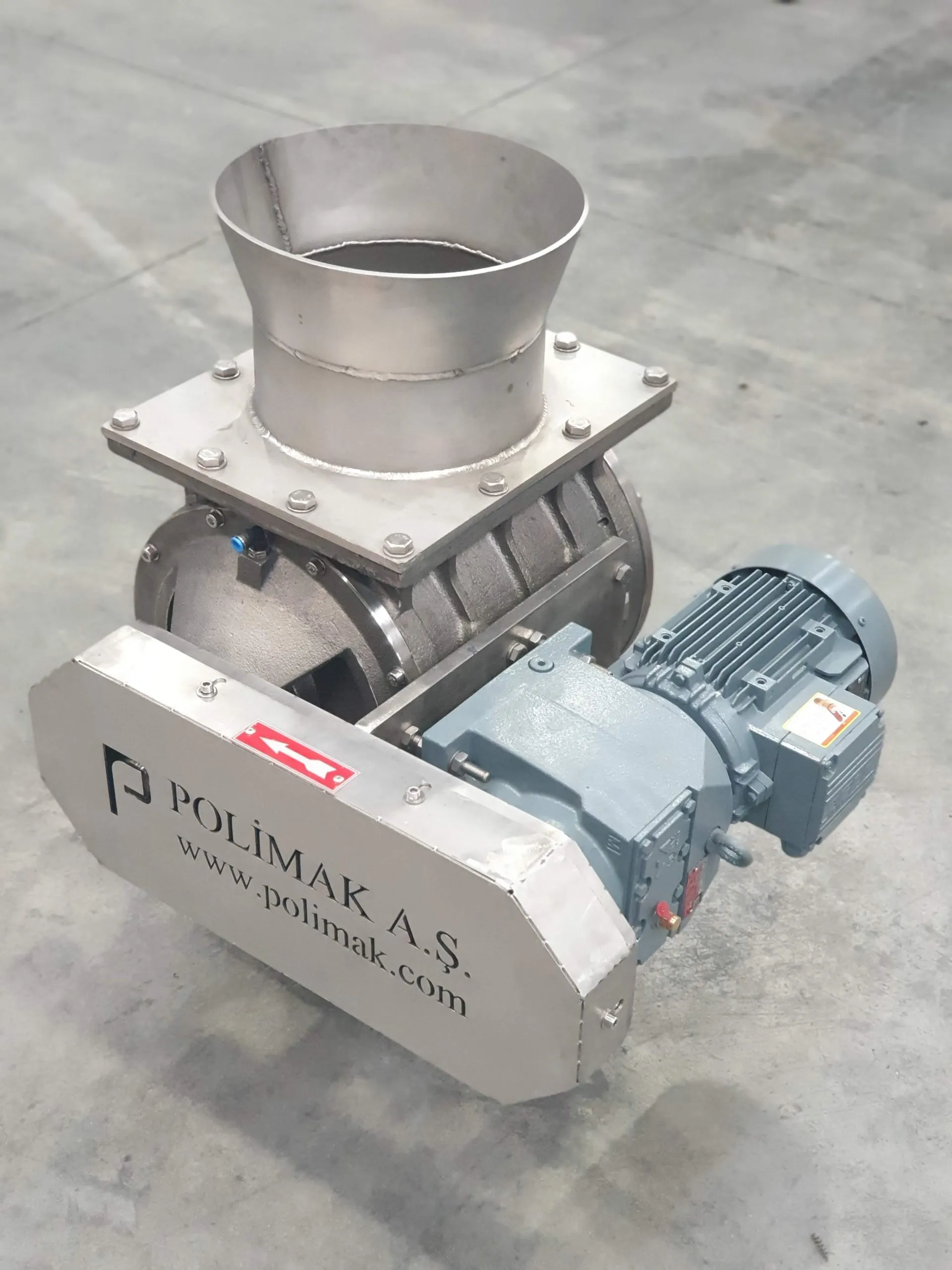
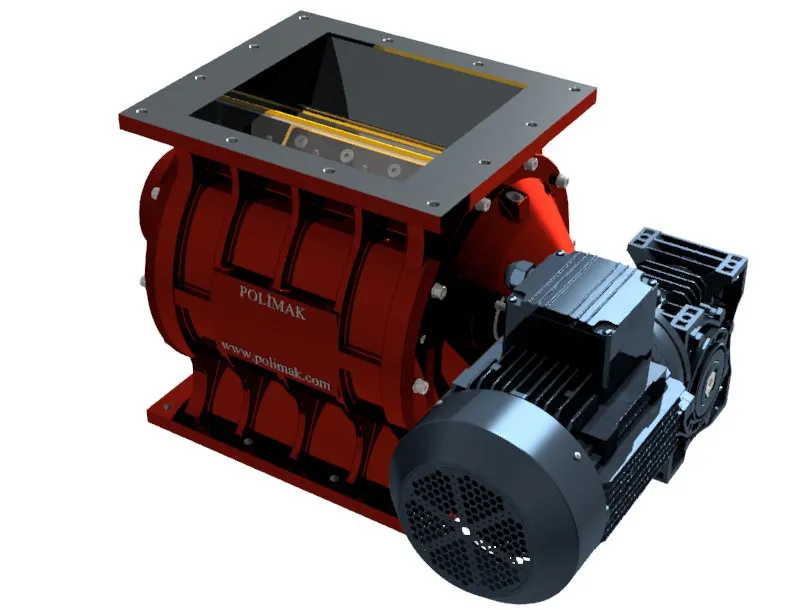
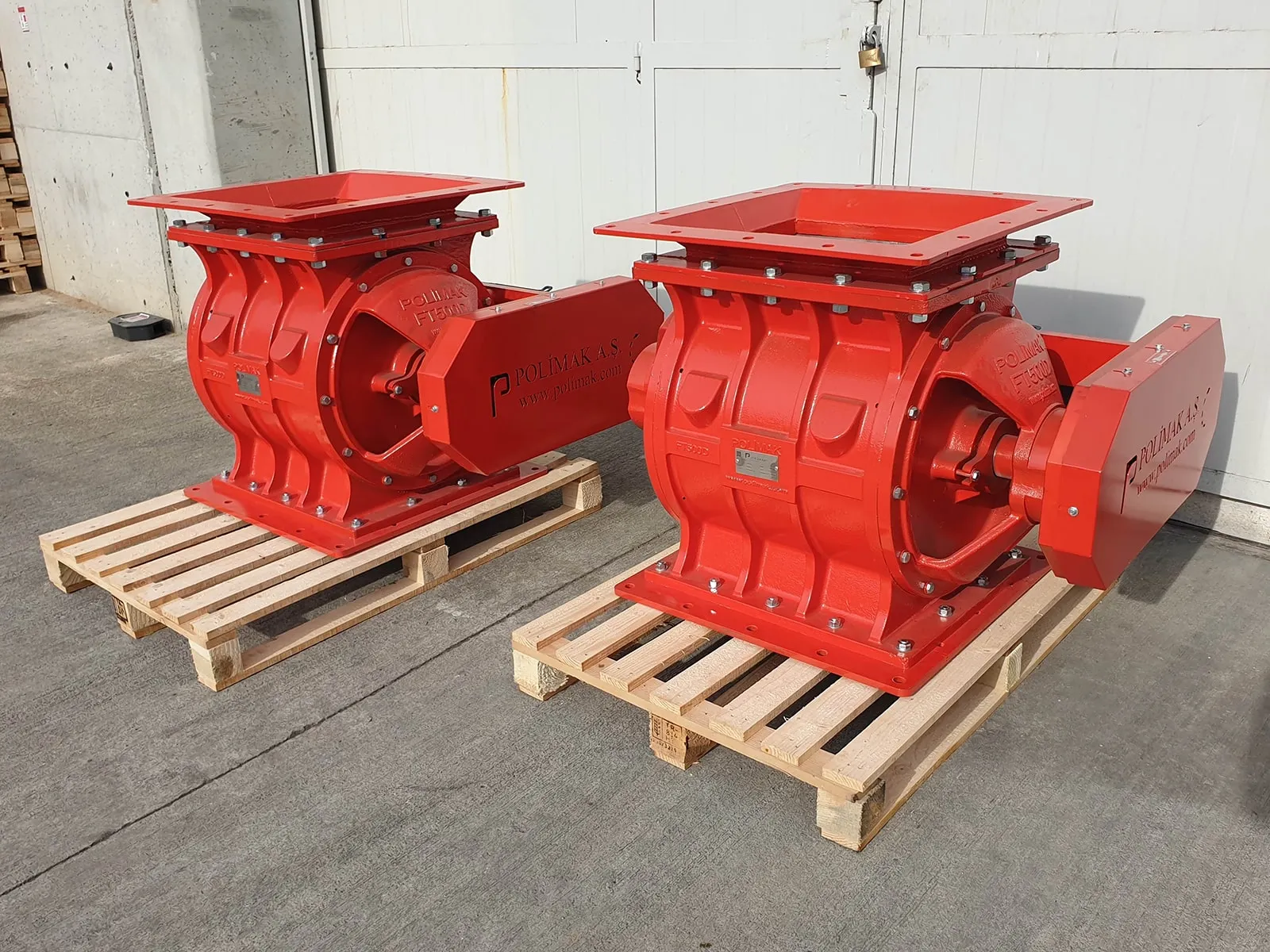
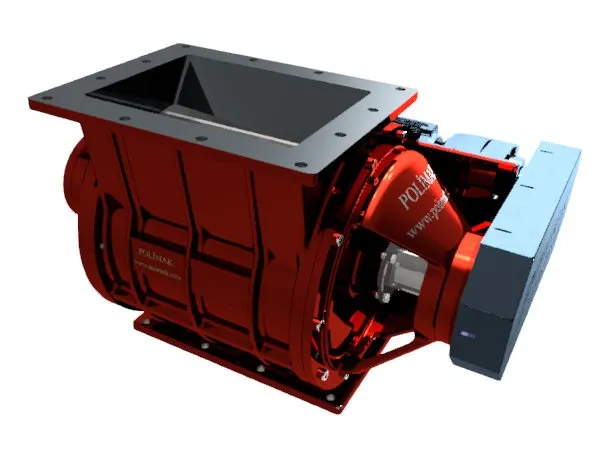
A rotary valve is a mechanical device widely used in dry bulk material handling applications to regulate the flow of solids between upstream and downstream equipment. It is also commonly known by various names, including airlock valve, star valve, and rotary feeder.
A rotary feeder is a type of valve whose primary function is to feed or meter dry bulk solids from an upstream device to a downstream device without necessarily maintaining a pressure differential. An airlock feeder is a valve that maintains a pressure differential while feeding or metering dry bulk materials into a downstream system.
Rotary valves find applications across numerous industries for a variety of industrial processes. They serve several key purposes, including:
| Component | Materials/Alternatives |
|---|---|
| End-Plate Construction | Cast iron, Stainless steel, Hardox, Carbon steel |
| Housing Construction | Cast iron, Stainless steel, Hardox, Carbon steel |
| Rotor Construction | Cast iron, Stainless steel, Hardox, Carbon steel |
| Seals | Lip seal, Gland packing |
Polimak offers a wide range of industrial rotary valves (also known as airlock valves) equipped with various options and accessories. These customizations help ensure smooth, efficient performance and safe operation over the long term, adapting to diverse industrial requirements and challenging environments.
These features can be installed on rotary valve endplates, housings, and drive systems. Some of the options and accessories that allow enhanced material handling by our rotary valves are as follows, providing tailored solutions for specific process needs.
Pneumatic Conveying Line Connection Adapter
A pneumatic conveying line connection adapter, also known as a discharge blow-through adapter, is used in pneumatic conveying systems to introduce dry bulk materials into a conveying stream in an efficient manner. The bulk material is introduced with as little turbulence as possible to ensure optimal flow.
The flange of the line connection adapter can be circular, square, or rectangular in shape, allowing flexibility to suit various system requirements. It is designed to be compatible with both flow-through and offset rotary valves, ensuring seamless integration into different pneumatic conveying configurations.
Slide Gate Valve
Slide gate valves are designed to efficiently regulate the flow of free-falling bulk materials. Since their function is to stop bulk material flow, they are also known as close-off valves or maintenance slide gate valves.
Slide gate valves generally have circular, square, or rectangular flanges, allowing for versatile installation options. They can be installed above a rotary valve, ensuring effective control of material flow.
Shaft Air Purge
A shaft air purge (SAP) serves a key function in rotary valves, especially when handling fine bulk materials. This system operates by introducing small amounts of compressed air through the valve’s cover plates and blowing air past the shaft seal and bearings. This process effectively prevents contamination from dust and material particles, helping to maintain the valve’s performance and prolong its lifespan.
The shaft air purge is also commonly referred to as a shaft seal purge, emphasizing its primary role in protecting the shaft seals from wear and damage. It is widely used across various industries such as food processing, pharmaceuticals, and chemicals, where handling fine powders, granules, and other dry bulk materials requires reliable contamination prevention.
Rotor Pocket Purge
A rotor pocket purge is a system designed to prevent material blockage inside the rotor pockets of rotary valves, especially in V-shaped pockets. A controlled flow of air keeps the pockets clear when handling dry bulk materials that tend to accumulate. This helps ensure smooth operation and reduces the risk of blockages.
The mechanism of a rotor pocket purge involves compressed air being passed through the rotor area to keep the pockets clear. A cavity air purge (CAP) is typically used with closed-end rotor types when handling abrasive, chipped, or flaky dry bulk solids. The CAP helps reduce abrasion on rotor shrouds and cover plates by blowing off bulk materials that tend to to settle between the shrouds and end plates.
Zero Speed Switch
A zero speed switch is a device used to monitor the rotor in a rotary valve. It is designed to detect when the rotor stops or slows down unexpectedly, triggering an alert or shutdown to protect the system. Also known as a rotational sensor, this safety feature is compatible with any rotary valve model and helps prevent equipment damage and process interruptions.
The zero speed switch is installed on the valve’s shaft guard at the non-drive end and connected to a control system. It alerts the programmable logic controller (PLC) when the rotor shaft stops rotating, providing valuable monitoring for the valve.
Shear Protector
Handling certain dry bulk materials, such as plastic pellets, wood pellets, plastic flakes, and nuts, often leads to breakage due to their fragile nature.This can occur when materials become lodged in the rotary valve, causing excessive force and damage. A shear protector helps reduce breakage by detecting jams and relieving pressure to protect both the material and the equipment.
The shear protector is equipped with a bent wiper that has a flexible polyurethane tip. This wiper sweeps overflow material into the next rotor pocket as the material flows in through the entry port.
In industrial processes that involve handling dry bulk materials, rotary valves serve a critical function in regulating and directing material flow. They provide controlled and consistent material flow between different stages of production, such as feeding, metering, or discharging bulk materials. Their ability to maintain airlock conditions while handling powders, granules, and pellets makes them critical for ensuring both process efficiency and system safety.
With our extensive experience in bulk handling systems, we design and manufacture rotary valves for various industrial applications. These valves are used in industries such as cement, food, chemicals, mining, plastics, and agriculture. Our 45 years of experience enable us to design and supply rotary valves customized to meet the specific requirements of our customers.
Where are rotary valves used?
Rotary valves are widely utilized in various bulk material handling industries. Key industries that depend on airlock feeders include:
Food Industry
The food industry is a rapidly growing sector involved in the manufacturing and processing of food for both human and animal consumption. Key processes in this industry include coffee processing, sugar refining, and corn milling. Polimak’s food-grade rotary valves, made from stainless steel with no crevices, are ideal for handling food products. These valves are commonly used in the processing of dry bulk food products such as milk powder, coffee powder, sugar, corn flour, and cornstarch.
Agricultural Industry
The agricultural industry is one of the largest in the world, responsible for crop production. It has played and continues to play a vital role in economic growth and development. The industry benefits from various bulk material handling systems, including rotary feeders, when processing bulk materials. Dry bulk solids commonly processed with rotary valves include wheat, barley, oats, rye, bran, chaff, chickpeas, beans, lentils, soybeans, sesame, rice, dried fruit, hazelnuts, peanuts, almonds, sunflower seeds, and grain cereals. Standard rotary valves made from cast iron or carbon steel are generally used to handle granular bulk solids.
Plastics Industry
The plastic industry frequently processes bulk raw materials in the form of powders, granules, and pellets. Rotary valves are designed for reliable performance, with both the valve body and rotor precisely engineered to prevent material shearing and jamming. Polymers such as polyvinyl chloride (PVC), polyethylene, polypropylene (PP), acrylonitrile butadiene styrene (ABS), and other related plastics are commonly handled using rotary valves.
Chemical Industry
Pure and sensitive dry bulk materials require carefully designed bulk material handling systems, such as rotary valves, to prevent contamination. Regular cleaning and inspection are essential to ensure smooth and trouble-free operations. Rotary valves made from corrosion-resistant materials are commonly used to handle a variety of substances, including sodium bicarbonate (baking soda), calcium sulfate (gypsum), sodium chloride (table salt), zinc chloride, calcium carbonate, and copper sulfate.
Mining Industry
Raw materials such as limestone and quartz, mined from the Earth’s crust, must be processed before they can be used by consumers. In industries like cement, rotary grinders are employed to reduce the size of feed materials, such as calcium carbonate (also known as calcite, with the chemical formula CaCO3) and lime, to liberate minerals from the surrounding rock. Rotary valves are then used to handle these liberated minerals in the process line. Due to the abrasive nature of these materials, our rotary valves are built with abrasion-resistant materials, such as Hardox, for enhanced durability.
Power Industry
Power generation (electricity) is often achieved using fossil fuels like coal in internal combustion steam technologies. Fly ash, a by-product of coal combustion, is transported from baghouse filters and ESP systems to bulk material storage systems like silos. Rotary valves are used to discharge fly ash from these storage silos.
How are Rotary Valves Used?
Rotary valves are widely used across various bulk material handling industries, as mentioned above. These valves play a crucial role in applications such as discharging dry bulk materials from upstream to downstream equipment, ensuring controlled material flow through the process line. Some common industrial applications of rotary valves include:
Bulk solids discharge from silos
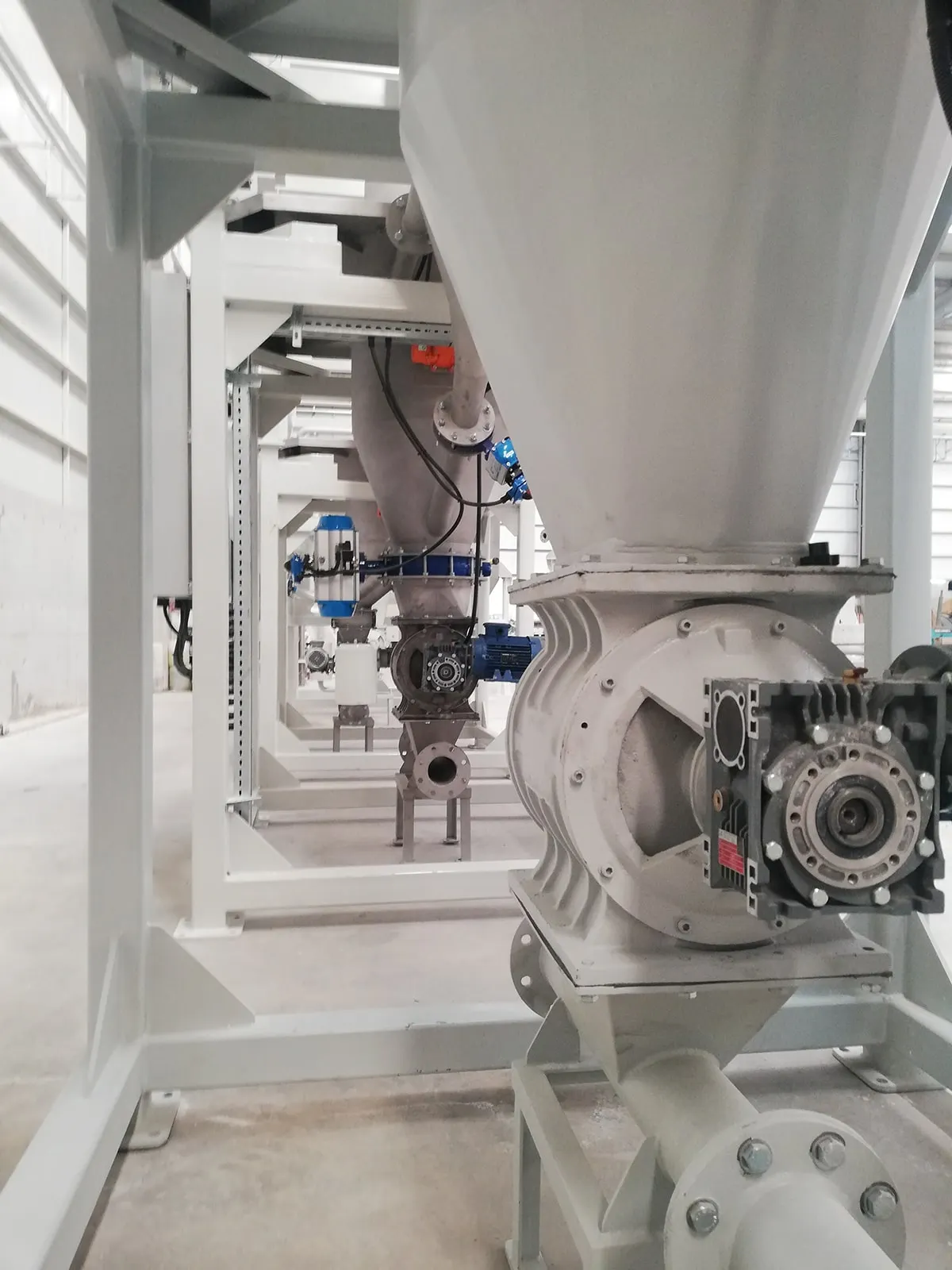
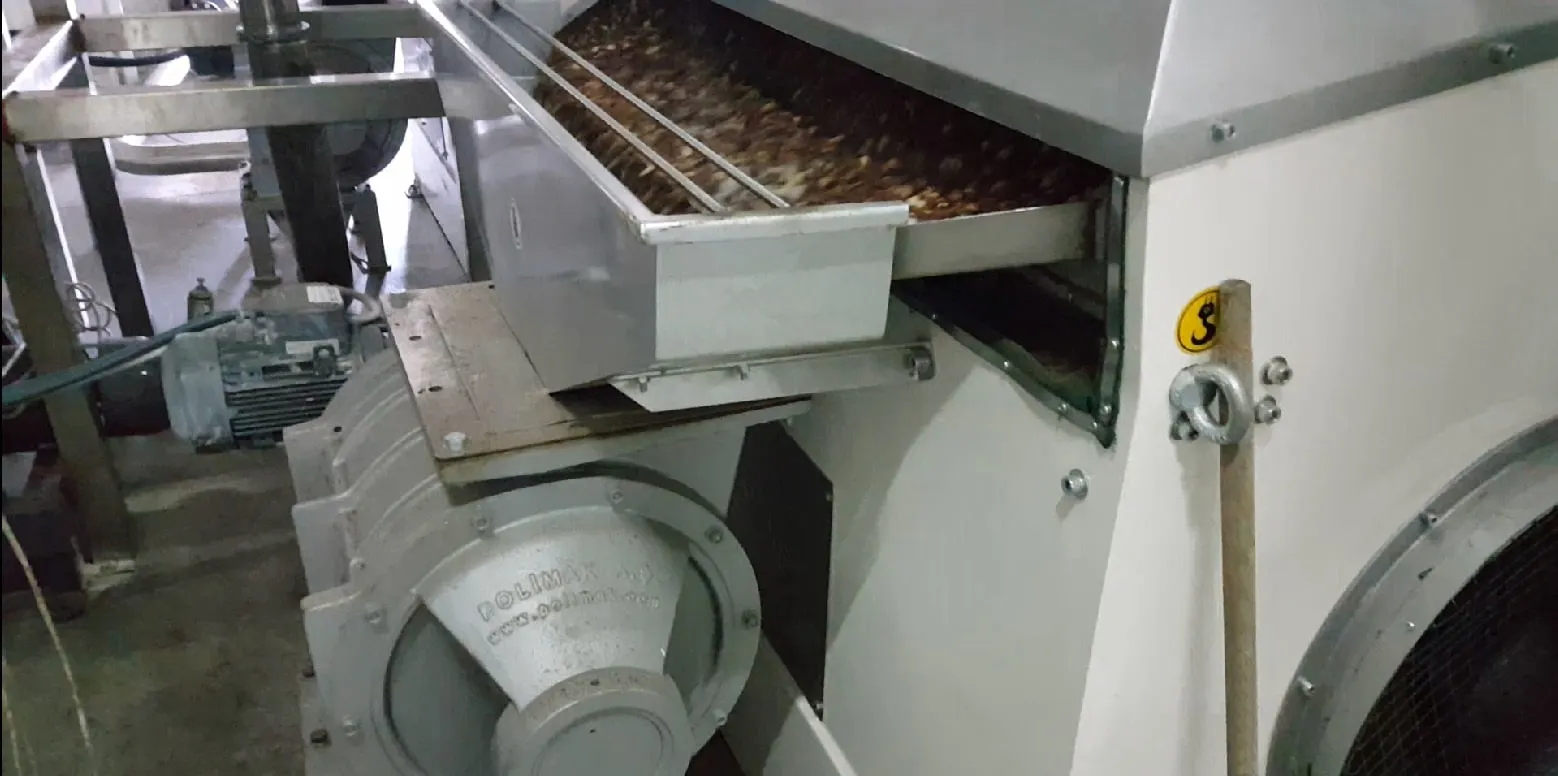
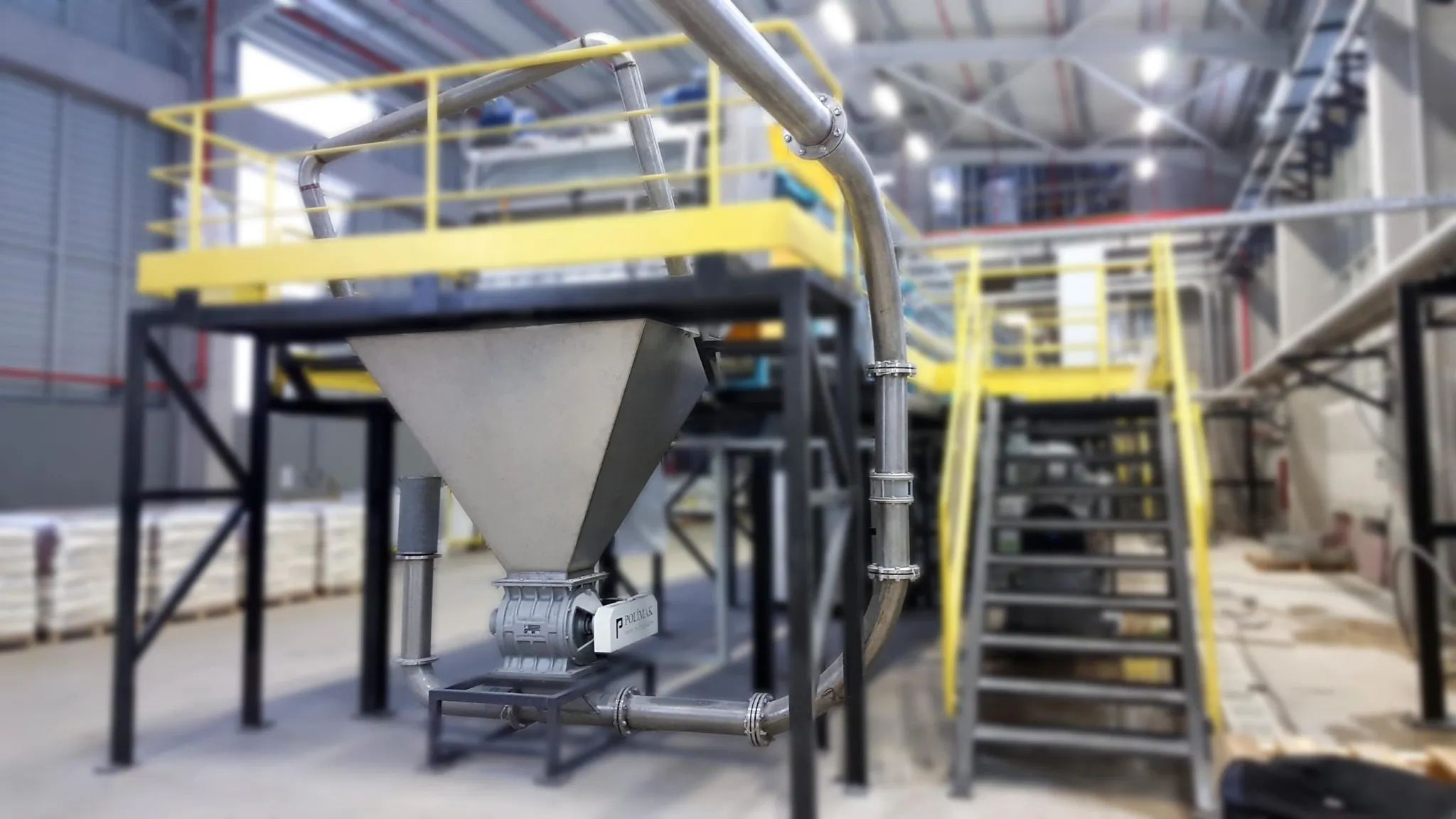
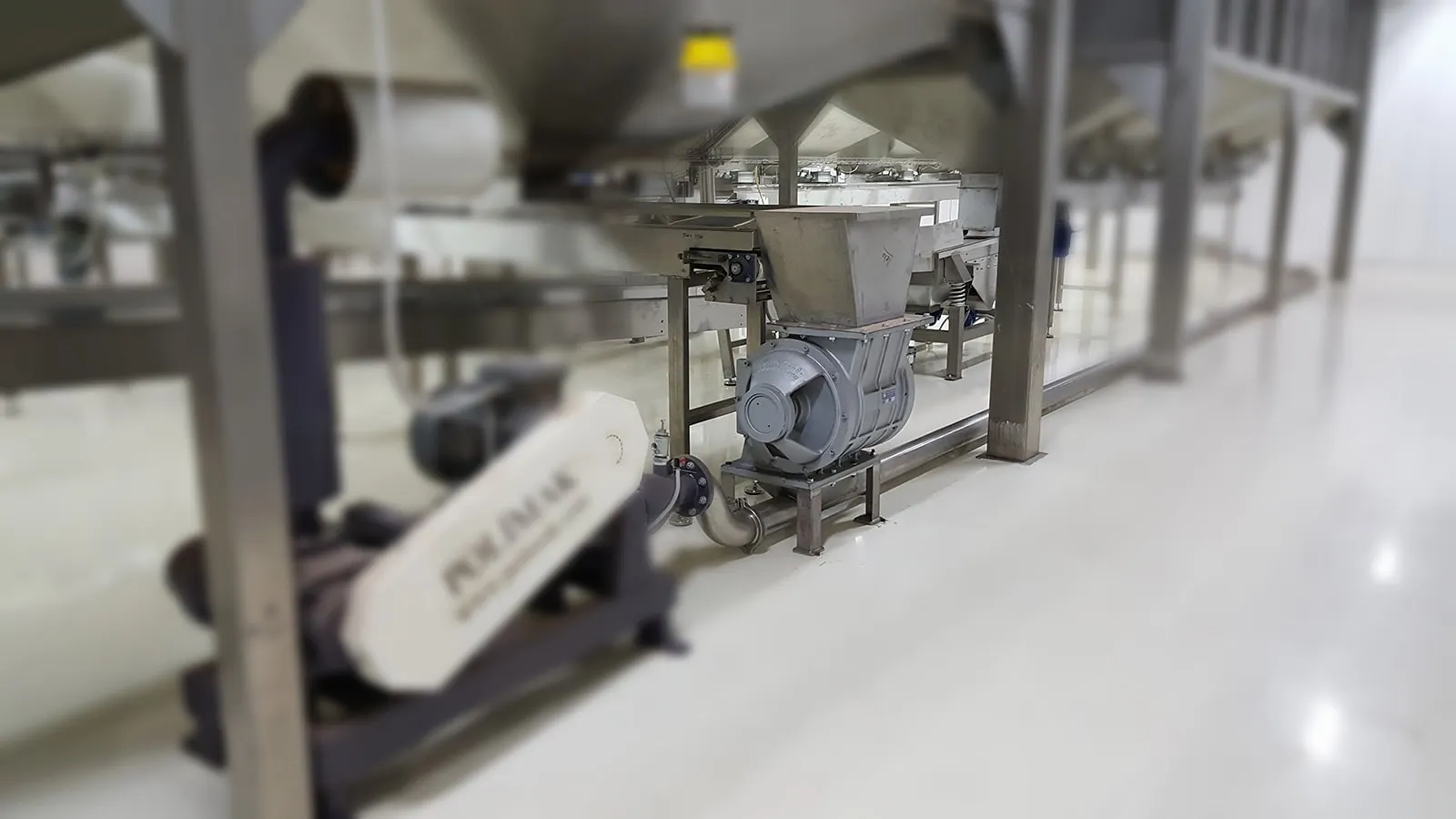
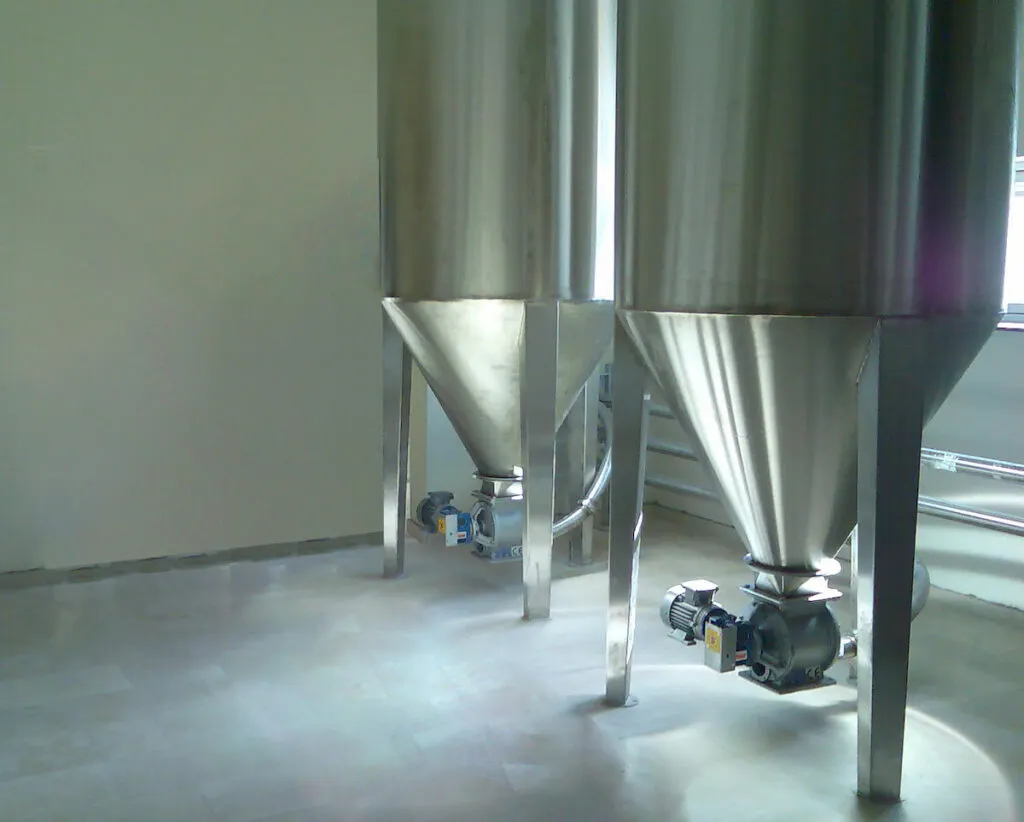
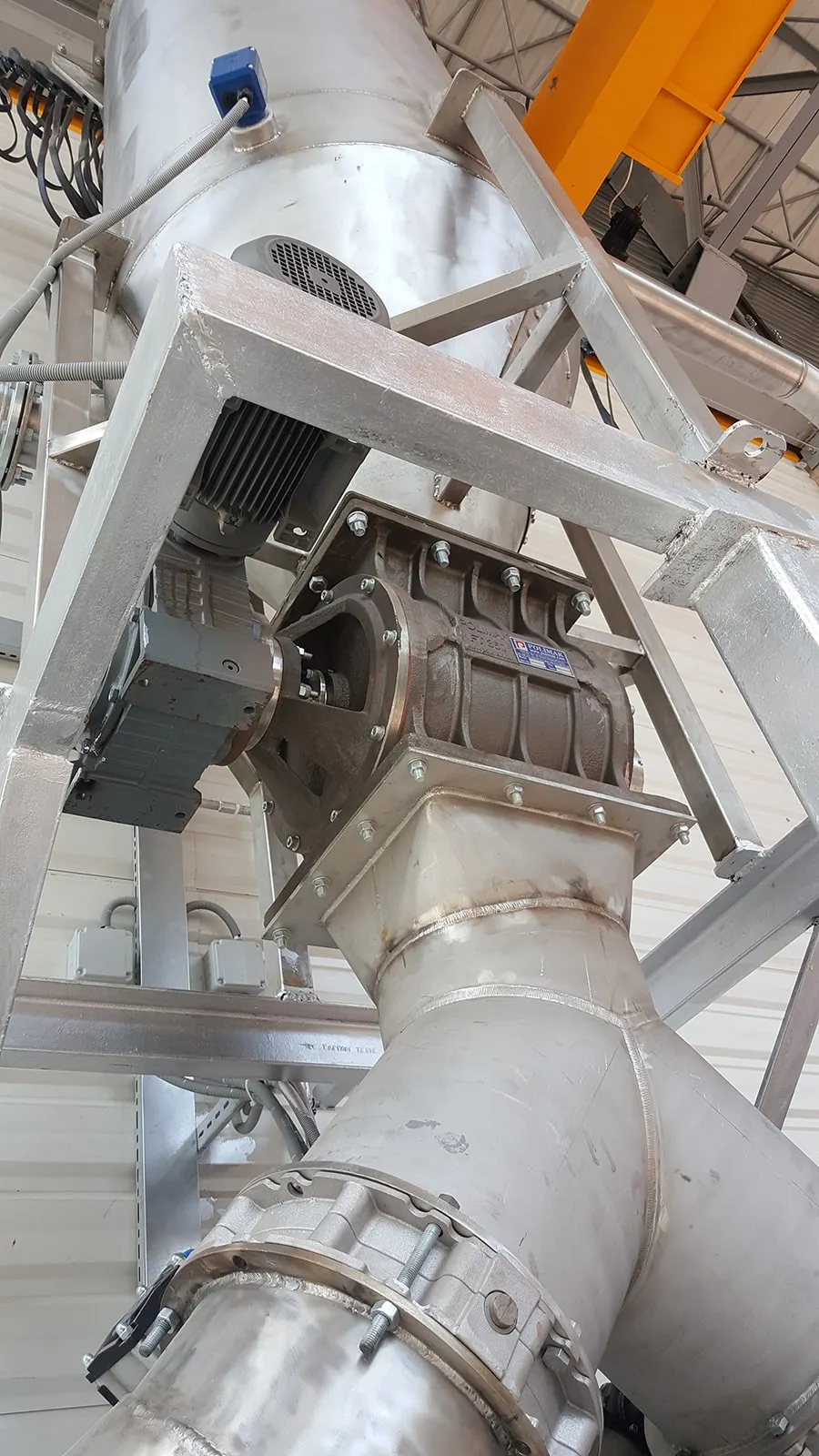
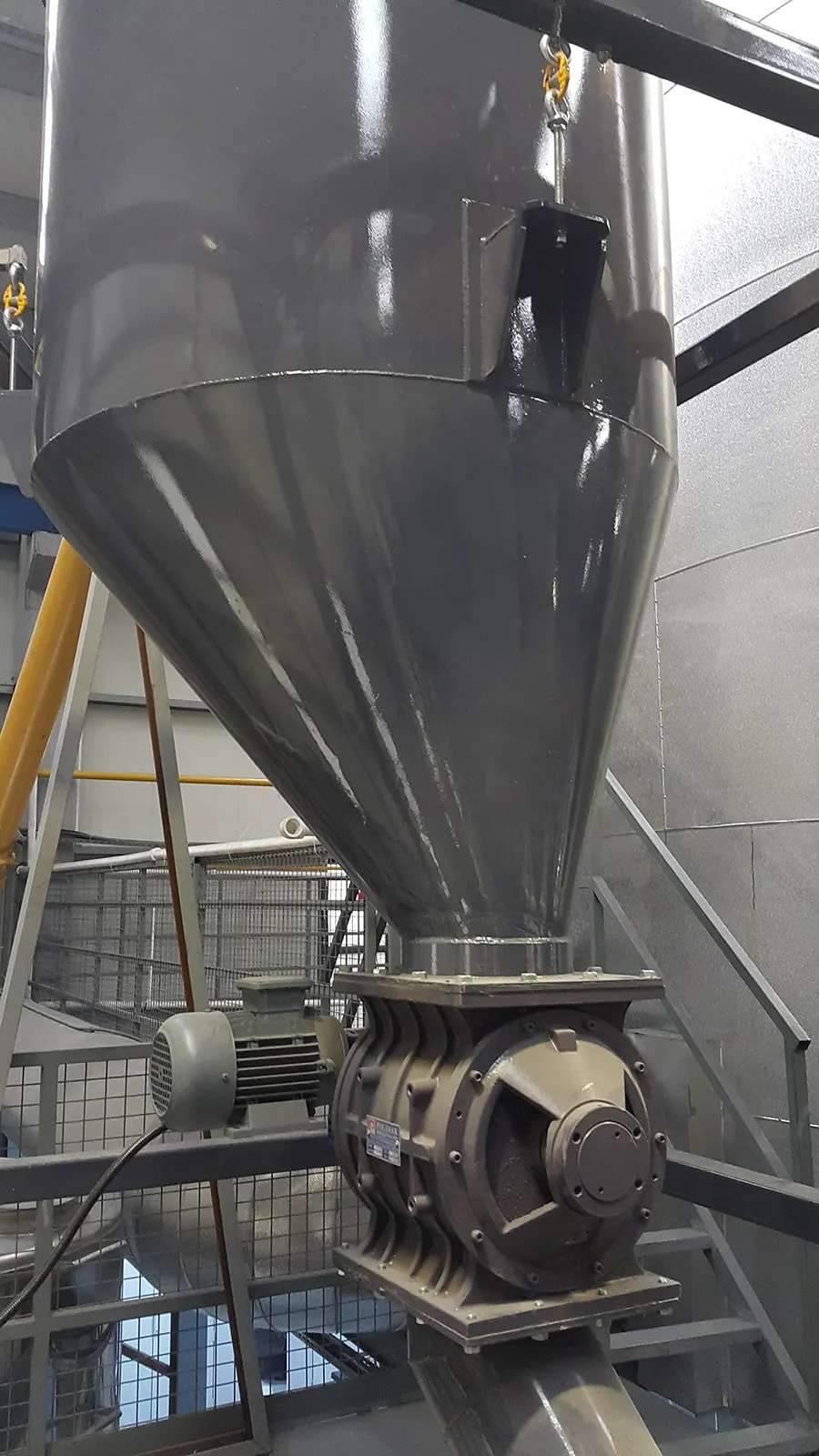
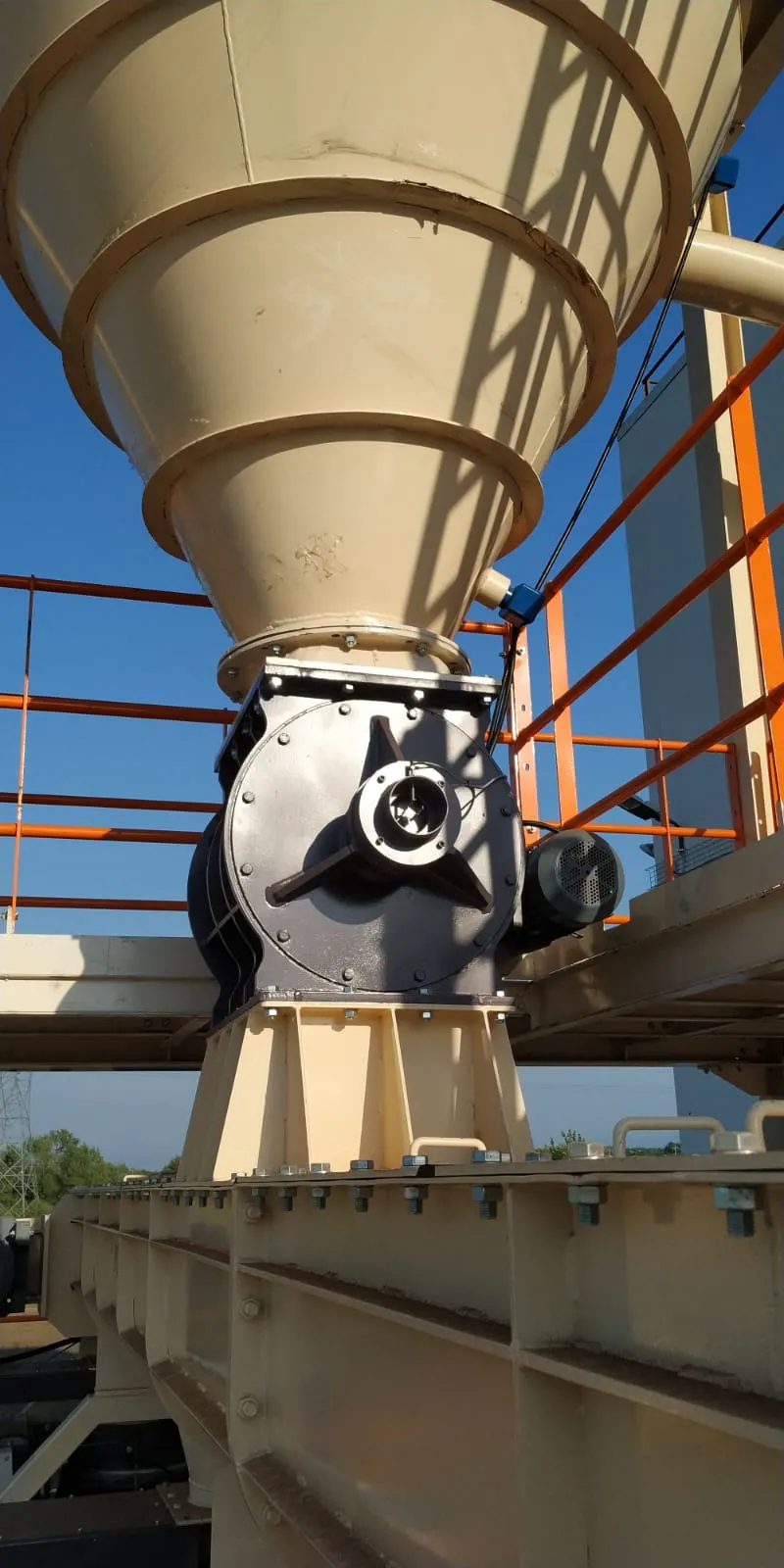
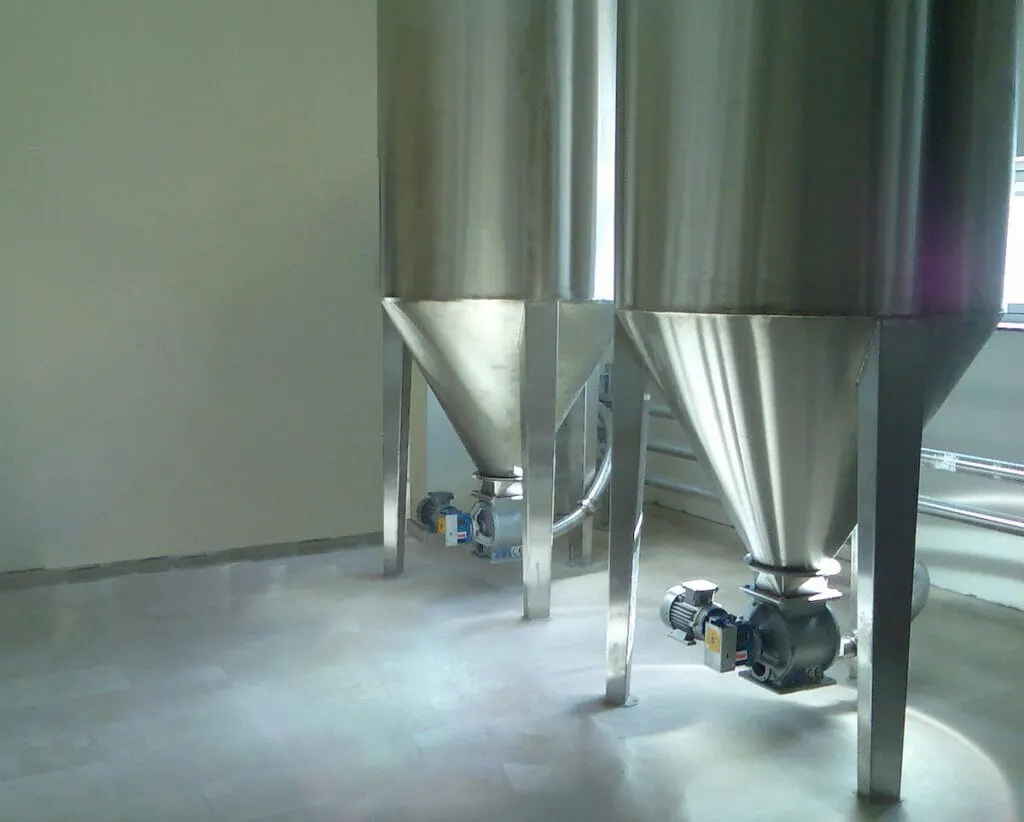
Rotary valves are commonly used to discharge dry bulk solids from storage silos. The valve is mounted at the bottom of the silo cone (at the outlet port) and allows for the controlled release of dry bulk materials to downstream equipment, such as screw conveyors, feeders, conveyor belts, bins, and pneumatic conveying systems. Rotary valves can also be mounted on hoppers or other bulk containment systems.
Dust particles discharge from cyclones
Sometimes referred to as a centrifugal collector, a cyclone is a dust collection device that separates particulates from the air using centrifugal force. It causes the incoming airstream to spin in a vortex. As the airstream changes direction, the inertia of the particulates drives them to separate from the air. The main vortex spirals downward, carrying coarse particles, while an inner vortex at the bottom of the cyclone spirals upward, carrying fine dust. The rotary valve discharges the coarse dust particles that settle at the bottom of the cyclone.
Dust particles discharge from Baghouse dust collectors
A reverse jet collector, commonly referred to as a pulse jet collector, uses bags supported by metal cages that are fastened to a tube sheet at the top of the collector. Dust enters the collector, and its particles deposit on the outside of the bags. The deposits are cleaned by short, periodic bursts of compressed air injected into the bags. These bursts cause the bags to flex, which dislodges the dust particles, causing them to fall off. The particles then settle at the bottom and are discharged by an airlock valve. The airlock minimizes downtime in the process line and reduces the need for operator intervention.
Bulk solids processing equipment feeding and discharging
Most bulk industries require additional equipment for the controlled feeding and discharging of dry bulk materials. Machines such as ball mills, pin mills, cone mills, hoppers, and conveyor systems need a steady flow of material to operate efficiently. Rotary valves can be used with this equipment to feed or discharge bulk materials in a controlled and effective manner.
Feeding pneumatic conveying systems
Rotary airlock feeders are used to feed dry bulk materials to conveying lines from upstream devices such as storage silos or hoppers. They prevent air leakage while maintaining constant feeding of dry bulk materials.
Handling large-sized bulk materials
Polimak manufactures high-quality rotary valves designed for the smooth handling of large-sized dry bulk solids, such as chickpeas, broad beans, and hazelnuts. Our valves ensure safe and efficient bulk handling, with a guaranteed harm rate of no more than 0.1%.
ATEX-certified rotary valves are essential components in bulk material handling industries that deal with combustible dry bulk materials. These valves are designed to minimize the risk of explosion by reducing or isolating the propagation of flames and pressure in case a combustible dust cloud ignites. Polimak’s ATEX rotary valves have been rigorously tested and certified to withstand explosion pressures of up to 10 bar, ensuring enhanced safety and reliability in hazardous environments.
Every component of the rotary valve, including the rotors, endplates, shafts, and seals, complies fully with ATEX regulations and incorporates explosion-proof features to ensure maximum safety and reliability. These valves are widely used across various industries such as food processing, pharmaceuticals, chemical manufacturing, plastics production, and grain handling, where combustible dry bulk solids like flour, sugar, powdered chemicals, plastic pellets, and starch are commonly handled. ATEX-certified airlock valves provide a secure and efficient solution for safely controlling material flow while minimizing the risk of dust ignition and explosion propagation in these sensitive applications.
Explosion Isolation and Flameproofing
There are various methods to prevent the flame from spreading throughout the production line if a dust cloud ignites during material handling.
One such method involves isolating the flame using ATEX-certified equipment, like rotary valves. These valves are engineered to stop the flame wave and withstand or mitigate the effects of explosion pressure. This capability is commonly known as flame resistance and explosion isolation.
Common combustible bulk materials include coal dust, sugar powder, flour, sawdust, plastic granules, grain dust, and powdered metals. In industries that handle flammable bulk materials, it is essential for rotary valves to be ATEX certified to ensure they meet strict safety standards designed to prevent ignition and withstand potentially explosive environments.
ATEX Zone Classification
Work environments where explosive atmospheres may be present must be carefully assessed and divided into designated zones under the ATEX directive. Zone classification is determined by evaluating the likelihood of an explosion and the duration an explosive atmosphere might persist. These factors influence the placement, size, and classification of each hazardous area. For areas containing combustible dust, fibers, or airborne particles, the ATEX directive defines the following zone classifications:
ZONE 20
Defined as the most hazardous dust zone under the ATEX directive, Zone 20 refers to areas where an explosive atmosphere in the form of a combustible dust cloud is present continuously, frequently, or for extended periods. These high-risk conditions are found inside equipment such as silos, hoppers, mixers, and rotary valves, where dust tends to accumulate and remain suspended. Robust explosion protection and preventive measures are critical in these areas due to the constant presence of ignition-prone dust.
ZONE 21
It refers to areas where an explosive atmosphere in the form of a combustible dust cloud is likely to occur occasionally during normal operation, but less frequently and for shorter durations than in Zone 20. While the risk is lower compared to Zone 20, it is still critical enough to require appropriate safety measures.
Zone 21 conditions can be found near machinery, transfer points, or around equipment such as bagging stations, conveyors, or dust extraction systems, where dust may escape and become airborne. In addition to ATEX-certified equipment, proper containment, effective ventilation, and regular dust control measures are essential to reduce the risk of ignition and ensure safe operation in Zone 21 areas.
ZONE 22
In this zone, the presence of an explosive atmosphere containing a combustible dust cloud is infrequent and typically occurs only for short periods during accidental situations. The risk of ignition is lower compared to Zones 20 and 21, but safety precautions are still necessary to prevent potential hazards. Zone 22 areas are usually found in places where dust may accumulate but is not normally suspended in the air, such as on floors, walls, or equipment surfaces.
The classification for zones containing hazardous gases, mists, or vapors is as follows:
ZONE 0
This zone refers to areas where an explosive atmosphere of flammable gases, vapors, or mists is present continuously or for long periods during normal operations. It represents the highest risk level for gas-related environments under the ATEX directive. Zone 0 conditions are found inside tanks, pipelines, or closed vessels, requiring safe equipment and strict safety measures to prevent ignition.
ZONE 1
It includes areas where an explosive atmosphere made up of hazardous gases, vapors, or mists is likely to occur during normal operation but less frequently and for shorter durations than in Zone 0. These conditions still pose a significant risk and are commonly found near valves, pumps, or equipment where flammable substances are handled. Proper safety measures and ATEX-certified equipment are required to minimize the chance of ignition.
ZONE 2
This classification applies to areas where an explosive atmosphere consisting of gases, vapors, or mists is not likely to occur during normal operation and will only last for a short time if it occurs. The risk of ignition in Zone 2 is lower compared to Zones 0 and 1, but it still requires the use of ATEX-compliant equipment and preventive measures. Such areas are typically found around storage tanks, pipe connections, or processing equipment where leaks may occur occasionally.
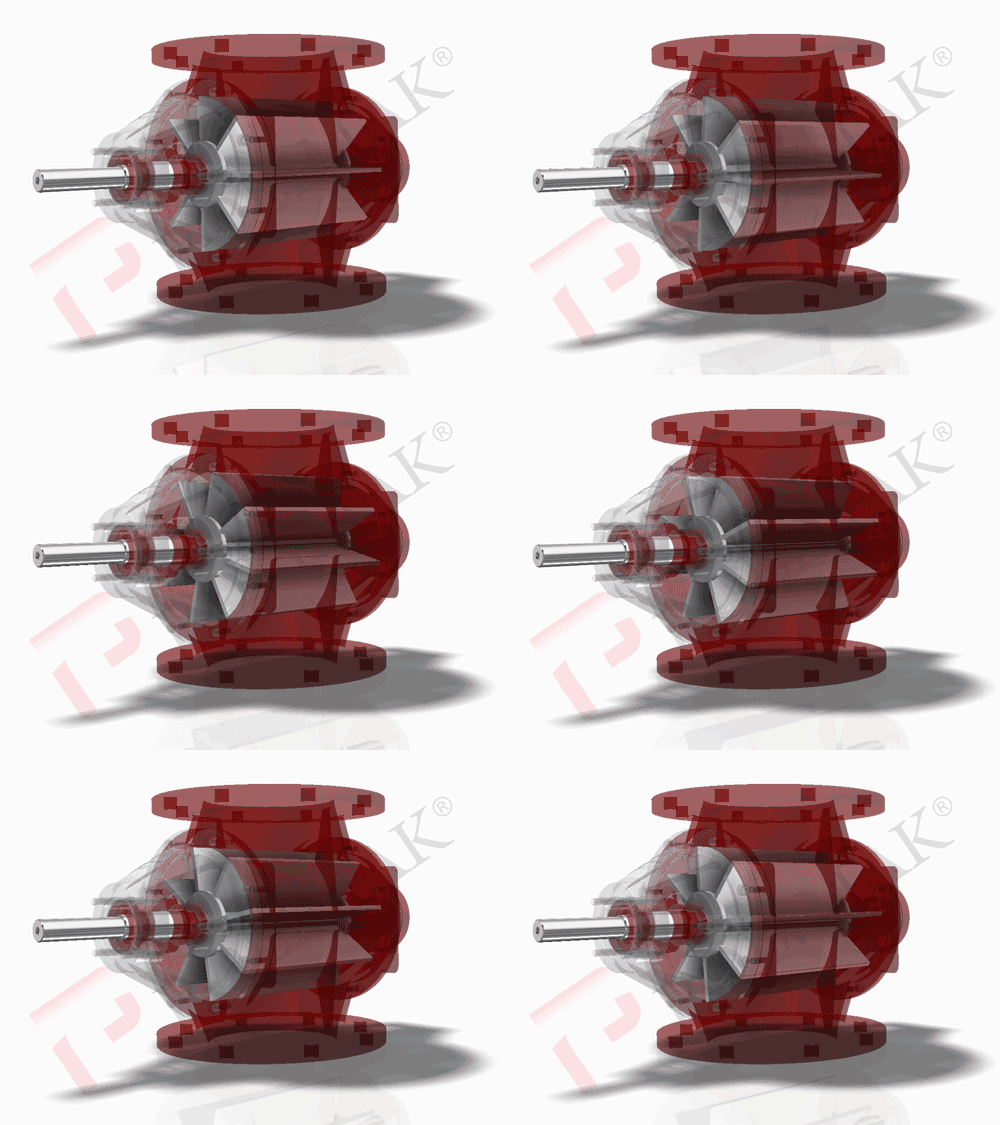
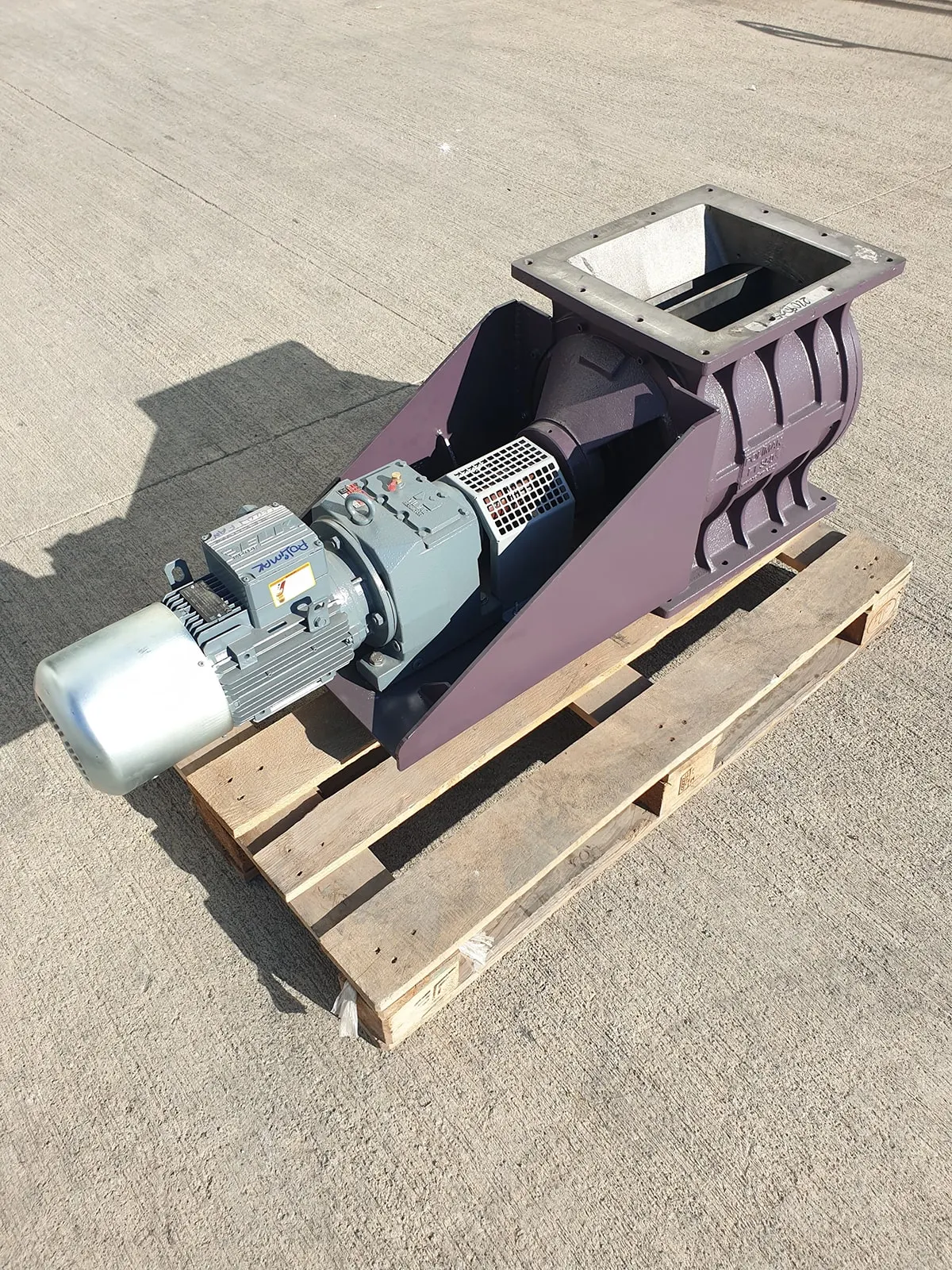
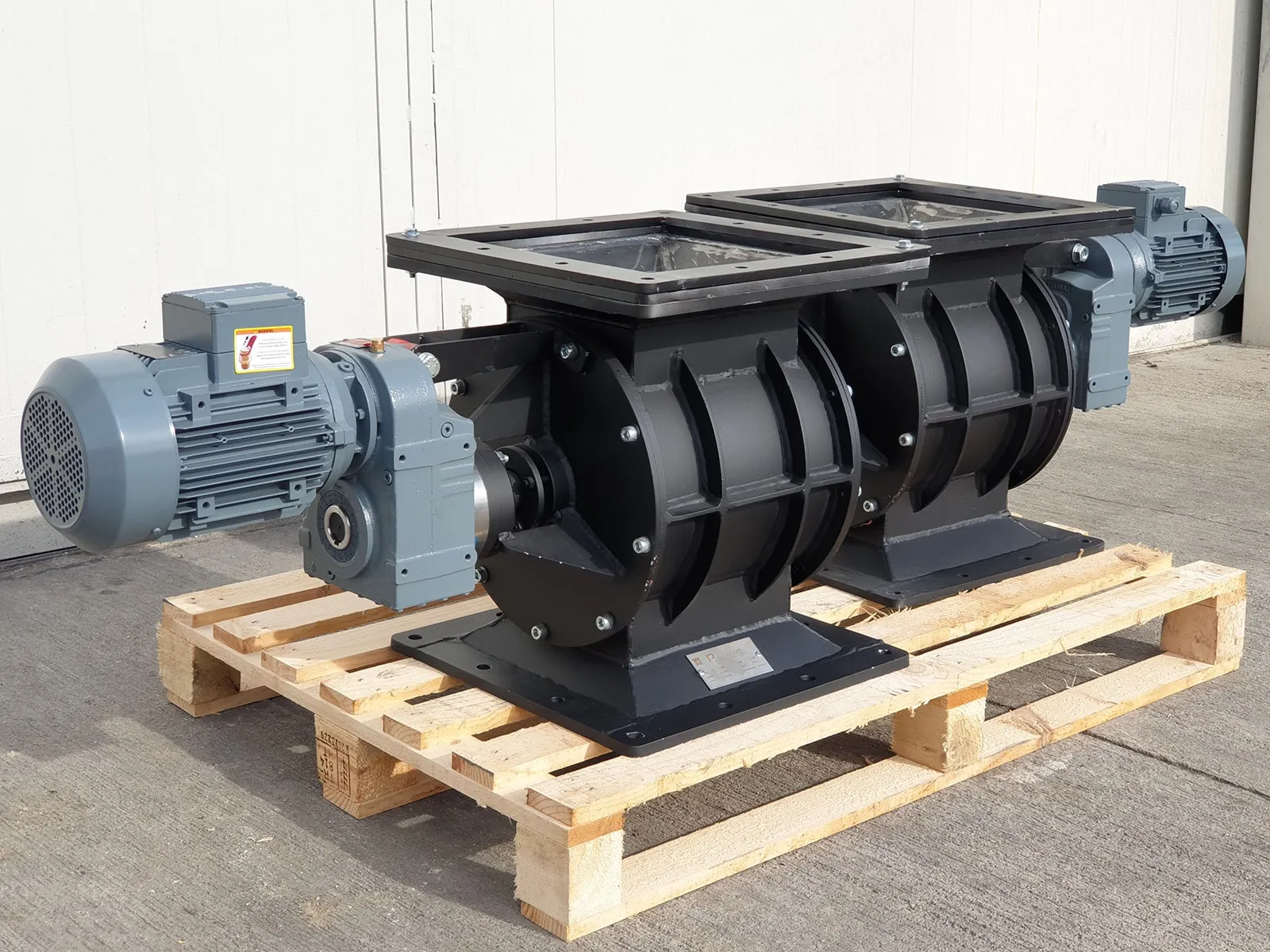
A rotary valve rotor is the rotating component within a rotary valve, a mechanical device used to regulate the flow of bulk materials from upstream to downstream equipment. The rotor’s rotation movement is powered by a drive motor connected to it. Various rotary valve drive connection options are available from Polimak to suit different operational requirements (LINK).
Two main designs of rotary valve rotors within our product range are the open-end rotor and the closed-end rotor. Both are commonly used in a wide range of industrial applications. We also provide various modified rotor types with enhanced features to improve performance during operation.
The optimal rotor design depends on several critical factors, including the specific application requirements, the physical and chemical characteristics of the bulk material being handled, and the desired feed rate. Detailed analysis and careful consideration of these elements ensures efficient operation, minimizes wear, and maximizes the performance and longevity of the rotary valve. Proper selection of the valve rotor is crucial, as it helps prevent premature wear, downtime, reduced efficiency, and increased maintenance.
Types of Rotary Valve Rotor
Open-End Rotors
Open-end rotors are frequently used in rotary valve applications due to their simple and effective design. The term 'open-end rotor' refers to the design in which the rotor pockets are open at both ends.
In this model, dry bulk solids are contained at each end of the pocket by the valve housing. This design helps prevent material leakage during rotation and ensures consistent feed control.
Open-end rotors are an ideal choice for handling lighter bulk materials, such as flour, powdered sugar, starch, and fine chemicals, and are commonly used in the food, pharmaceutical, pet food, and chemical industries.
Closed-End Rotors
In contrast to open-end rotors, which have open-ended rotor pockets, closed-end rotors are equipped with discs. These discs, also known as shrouds, are welded to each end of the rotor pockets.
This design prevents the blades from coming into direct contact with the endplates. It also helps reduce bearing contamination by providing better sealing. Compared with open-end rotors, closed-end rotors provide better protection against product leakage.
Closed-end rotors are commonly used in industries such as chemicals, construction, plastics, and various other bulk material handling applications. They are especially well-suited for handling abrasive, coarse, and fibrous materials like cement, sand, plastic pellets, and powdered chemicals.
Adjustable Tip Rotors
In the case of handling abrasive dry bulk solids, adjustable tip rotors are commonly used to ensure consistent performance despite gradual wear. Handling abrasive materials often leads to premature wear of the rotor tips. Adjustable tip rotors offer a practical solution, as their tips can be easily replaced without the need to replace the entire rotor.
The blades have tips attached to their ends, which can wear out prematurely due to the characteristics of the handled bulk materials. When the tips wear down, the clearance between the valve housing and the rotor is compromised. However, the tips can be easily replaced to maintain optimal clearance between the housing and the blades.
These rotors are used in a variety of industries that handle especially abrasive materials, including construction, mining, minerals processing, and cement production. In these applications, materials such as sand, gravel, clinker, and crushed stone can cause significant wear on equipment, making robust rotor designs essential for maintaining efficiency and durability.
Reduced Volume Rotors
Reduced volume rotors have smaller rotor pocket volumes, which decrease the overall volumetric capacity of the rotary valve. This design allows the valve to match the required throughput with a high degree of accuracy.
When bulk materials pass through the valve too quickly, it can cause operational problems like clogging in downstream equipment. Reduced volume rotors offer precise control over material flow, helping to avoid these issues and ensure smooth system performance.
Reduced volume rotors are commonly used in industries such as pharmaceuticals, chemicals, food, construction, and pet food, where precise control of material flow is critical. Their ability to match the volumetric capacity to specific throughput requirements makes them ideal for applications demanding high accuracy and consistent processing.
Adjustable Polyurethane Tip Rotors
Adjustable polyurethane tip rotors have all the characteristics of adjustable tip rotors, as well as a polyurethane coating that provides enhanced wear resistance and improved durability.
These flexible tip designs are ideal for handling large-sized and moderately abrasive dry bulk solids, as they can absorb impact and reduce wear on the rotor. These rotors are commonly used for bulk solids such as plastic flakes, wood pellets, plastic pellets, and plastic regrind, serving industries like plastics manufacturing, recycling, wood processing, and composite materials production.
Staggered Pocket Rotors
Staggered pocket rotors have pockets arranged in alternating patterns, meaning they are not directly aligned. This configuration supports continuous and efficient bulk material discharge, adapted to the flow characteristics of the material and specific application requirements. The term 'staggered' refers to the offset structure of the rotor pockets, which promotes smoother transfer into downstream equipment.
Staggered pocket rotors are widely used in industries such as construction, pharmaceuticals, plastics, and pet food. They handle materials like cement, sand, pharmaceutical powders, plastic pellets, and dry pet food ingredients.
Scalloped Rotors
Scalloped rotors are designed with smooth U-shaped pockets that promote gentle handling and efficient discharge of sticky dry bulk materials, in contrast to V-shaped pockets which can lead to material buildup. This U-shaped design helps minimize packing, ensuring consistent flow and reducing the risk of blockages.
Scalloped rotors are commonly used in the food, chemical, and pharmaceutical industries to handle sticky bulk materials such as dough, sugar pastes, pharmaceutical granules, and various adhesives. Handling these challenging bulk solids requires the use of specially designed scalloped rotors.
Metering Rotors
Metering rotors are designed to deliver accurate and controlled feeding of bulk materials, making them suitable for applications requiring precise dosing of small quantities or test batches. These rotors ensure consistent material flow, which is essential in processes where exact measurements are critical. Commonly used for handling fine powders and dry bulk solids, metering rotors play a vital role in industries such as pharmaceuticals, chemicals, and food processing.
Polimak offers three different types of rotary valve drive connections, each suited to specific operational needs and installation requirements:
These drive connections are implemented to a rotary valve by means of a rotary valve rotor.
A worm gear serves as the central component of a worm gear reducer drive connection. This compact gearing system is designed to convert high-speed motor input into low-speed output while significantly increasing torque. That is why it is commonly referred to as a “worm gear reducer.”
The low-speed output is determined by the ratio between the number of threads on the worm and the number of teeth on the worm wheel. In other words, the output speed depends on the gear reduction ratio..
Worm gears find applications in a variety of equipment, including rotary valves. Their ability to provide high torque and precise speed reduction makes them ideal for controlling motion in these systems.
The drive system consists of an electric drive motor and a worm gear reducer. This worm gear reducer drive is directly connected to the valve rotor shaft. This connection reduces the rotation speed of the rotor shaft inside the valve housing, allowing smooth and controlled bulk material flow within the system.
In this configuration, a chain drive is used to transmit mechanical power from an electric drive motor to a driven shaft.
This system consists of a chain and two or more sprockets. In the case of rotary valves, the system typically uses two sprockets.
The sprockets are mounted on the drive motor shaft and the driven shaft (valve rotor shaft), and the chain engages with the sprocket teeth. During operation, power is transmitted from the motor to the valve rotor through the chain.
Chain drives alone cannot reduce the motor's output rotational speed. Therefore, this setup also includes a worm gear reducer together with chain drive connections.
In a direct coupling drive connection, the main component is the coupling, commonly referred to as a shaft coupling. Shaft couplings are designed to transmit torque between a driving shaft and a driven shaft.
Shaft couplings are made up of two hubs, each securely attached to the end of a rotating shaft. These hubs transmit torque from one shaft to the other. An electric drive motor and the driven machine (rotary valve) are directly connected using a shaft coupling.
The coupling does not reduce the rotational speed of the motor. Therefore, a worm gear reducer is typically used to maintain a low-speed output. A direct coupling drive connection offers several benefits, including the absorption of mounting errors (such as shaft misalignment) and vibration absorption during operation.
Rotary valve endplates are components that seal the ends of a rotary valve, ensuring proper containment and directing the flow of bulk solids through the valve. They provide structural support and help maintain the valve’s efficiency by preventing leaks and contamination.
Endplates are precisely designed and manufactured to fit securely on both ends of a valve housing, serving as the side covers of the housing. They contain and prevent the leakage of dry bulk solids along the longitudinal axis of a rotary valve. Each rotary valve endplate includes a circular opening at its center, which acts as a pathway for the rotor shaft, enabling the rotation of the rotary valve rotor during operation.
Rotary valve endplates are divided into two categories based on their design configuration: inboard and outboard mounted bearings. They are sometimes referred to as housing cover plates. Bearings and seals are mounted on these cover plates to guarantee smooth operation and prevent leaks during bulk solids handling.
Rotary Valve Endplate Configurations
Inboard Bearings
Inboard bearings enable the smooth rotation of the rotor shaft. They are mounted directly onto the endplate within the housing cover plates.
Inboard-mounted bearings are typically used in low-duty rotary valves where the process handling requirements are less complex. They are suitable for handling less abrasive or lighter bulk materials that place lower stress on the equipment.
Inboard-mounted bearings are more susceptible to contamination due to their orientation and may not be suitable for applications involving higher temperatures. For example, processes such as cement production or handling hot minerals often exceed the temperature limits of inboard-bearing designs, making them unsuitable for such demanding conditions. Instead, they are commonly used in less demanding environments, such as plastic processing or dry food production, where materials like plastic pellets or flour are handled under controlled conditions.
Outboard Bearings
Similar to inboard bearings, outboard bearings facilitate the smooth rotation of the rotor shaft through the endplates. However, these bearings are mounted externally on the cover plates.
One significant advantage of outboard-mounted bearings is that, thanks to their orientation, they are not exposed to product contamination. This makes them suitable for use in heavy-duty rotary valves.
They can operate effectively under a wide range of process handling conditions and provide enhanced protection for the bearings. Outboard bearings are commonly used in demanding industries such as cement, mining, chemicals, and minerals processing, where abrasive or high-temperature materials like clinker, fly ash, limestone, and hot powders are frequently handled. Their durability and isolation from the bulk material stream make them ideal for maintaining reliable performance even in harsh operating environments.
Gland Packing Seals
Gland packing seals provide an airtight seal around the rotor shaft. This sealing prevents bulk materials from escaping or leaking during the shaft’s rotation.
The seal is manually inserted into the stuffing box and compressed with a gland follower. Depending on the application and the material being handled, multiple rows of gland packing may be used.
This type of seal is one of the most commonly used in rotary valves. Its proven durability and ease of installation contribute to its widespread adoption in various applications.
Lip Seals
The main function of lip seals is to prevent contaminants from entering the bearing housing and to retain lubricants within the sealing area. They also serve to confine pressure within the system, maintaining optimal sealing performance and prolonging the lifespan of the components.
The seal functions by maintaining consistent contact with the rotor shaft as it rotates. The sealing edge diameter is slightly smaller than the shaft diameter to ensure a tight fit. Additionally, the sealing lip’s front face is angled at the point of contact with the shaft to reduce friction. A garter spring applies consistent pressure on the shaft to maintain an effective seal.

By subscribing you agree to with our Privacy Policy and provide consent to receive updates from our company.