INNOVATIVE

Rotary Valve Models, Drive System, Rotors & Endplates

QUALITY

Rotary Valve Models

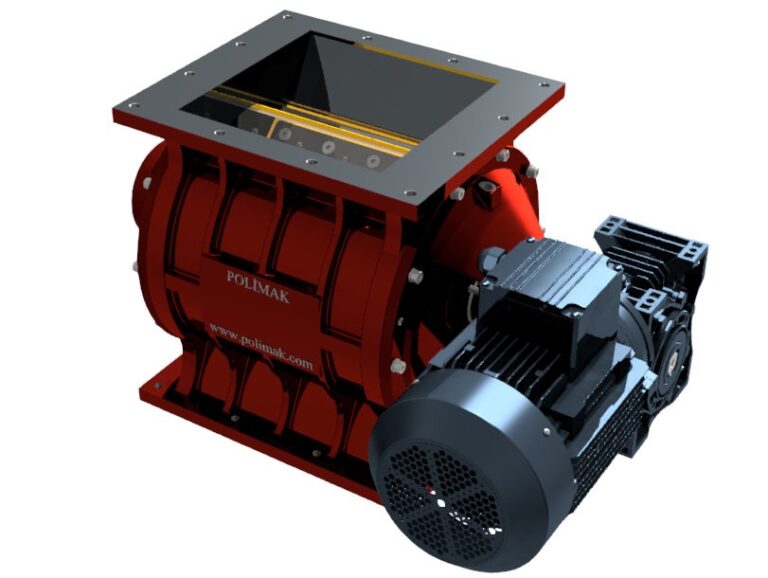
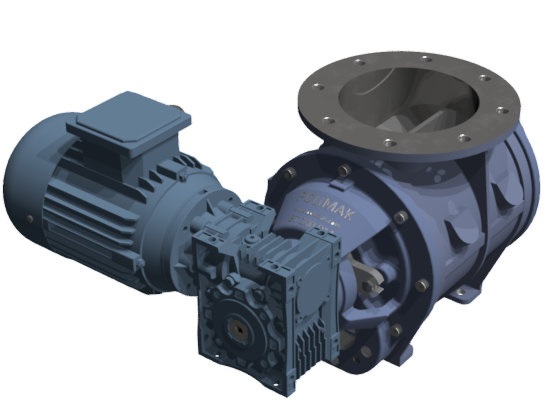
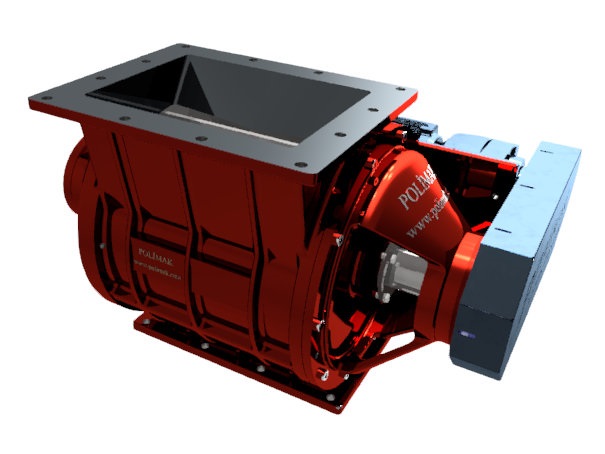
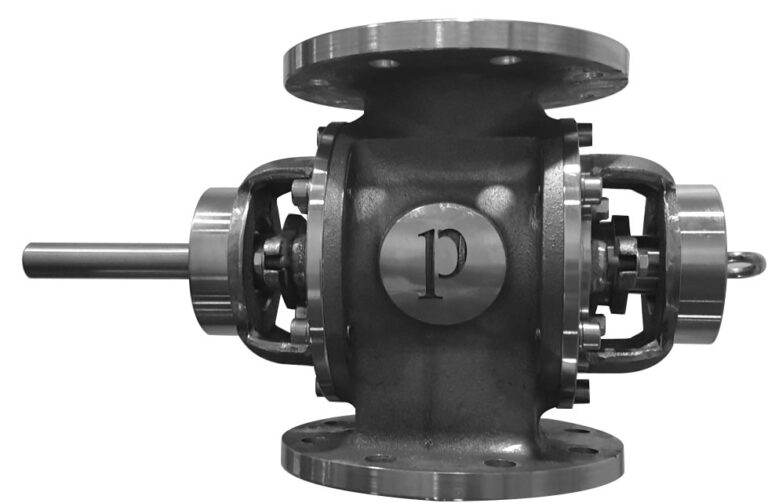
Three distinct rotary valve models (flow-through, blow-through and off-set) are produced by Polimak, each suitable for various applications. Our rotary valve design variation provides our customer with a broad model selection for handling different dry bulk materials with different properties. These valve models can be designed with different rotary valve drive connection configurations. Polimak rotary valve models come with the assurance of decades of experience, great know-how, as well as high-quality materials used in manufacturing.

Flow-through Models

Flow-through valve types are also known as drop-through valves. The two ports (inlet and outlet) on the valve housing are vertically aligned and tend to be the same size. During operation, empty rotor pockets are filled with the bulk solids vertically flowing down from upstream equipment, they are carried through the valve housing and then vertically discharged through an outlet. Drop-through valves are widely used for non-cohesive free-falling dry bulk materials like sand, wheat, rice, coffee beans and many others. Flow-through rotary valve models can be produced from stainless steel (AISI 304 and 316) for food and chemical industrial applications. They can also be built from hardox steel for abrasive dry bulk solids.

Blow-through Models

Blow-through valves are designed with troughs that are used to connect to pneumatic conveying lines, hence they are installed directly in a conveying line without any intermediate equipment. Bulk materials are supplied to the valve via its inlet as the rotor rotates. A filled rotor pocket offloads the bulk materials into the trough where the conveying air conveys the materials through a process line. Blow-through valves are utilised for sticky and cohesive bulk solids flour, milk powder, custard etc. For food and chemical industrial applications, stainless steel (AISI 304 and 316) blow-through rotary valve models are available, whereas hardox rotary valves are available for abrasive bulk materials.

Off-set Models

Off-set rotary valves are sometimes referred to as slide-entry valves. The inlet and outlet ports are offset from the valve’s housing vertical line. When a rotor rotates past a valve’s inlet, this offset allows an upcoming empty rotor pocket to only partially fill. Partial filling minimises bulk material shearing. It also prevents jamming of a rotor caused by dry bulk particles trapped between the rotor and valve housing. The volumetric fill efficiency of an empty pocket may vary depending on the material, generally between 40% to 60%. It is used for bulk materials like sunflower seeds, plastic pellets and peanuts. Stainless steel (AISI 304 and 316) can be used to produce offset rotary valve models for food and chemical industrial applications. For abrasive dry bulk materials, the valves can also be made of hardox steel.

Custom design rotary valves

Polimak has significant expertise across various technology areas and continues to push boundaries of the production of bulk material handling systems such as rotary airlock valves to meet our customer’s application requirements. Our primary skills are technology integration and design synthesis. To ensure that the produced rotary valves meet and exceed our client’s expectations (operation, cost etc.), integrating proper levels of technology for the application is very crucial. Polimak’s custom-engineered production incorporates problem definition, conceptualization, design, validation, production and installation. Our teams successfully carry out these steps efficiently and provide custom-designed rotary valves in a short period of time.

Rotary Valves Specifications

End-plates construction materials: cast iron, stainless steel, hardox, carbon steel.

Housing construction materials: cast iron, stainless steel, hardox, carbon steel.

Rotor construction materials: cast iron, stainless steel, hardox, carbon steel.

Seals: Lip seal, Gland packing.

Rotary Valve Drive System

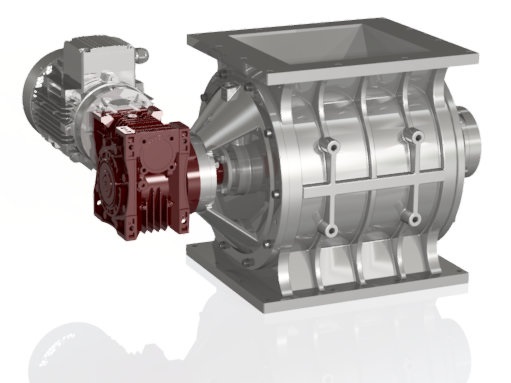
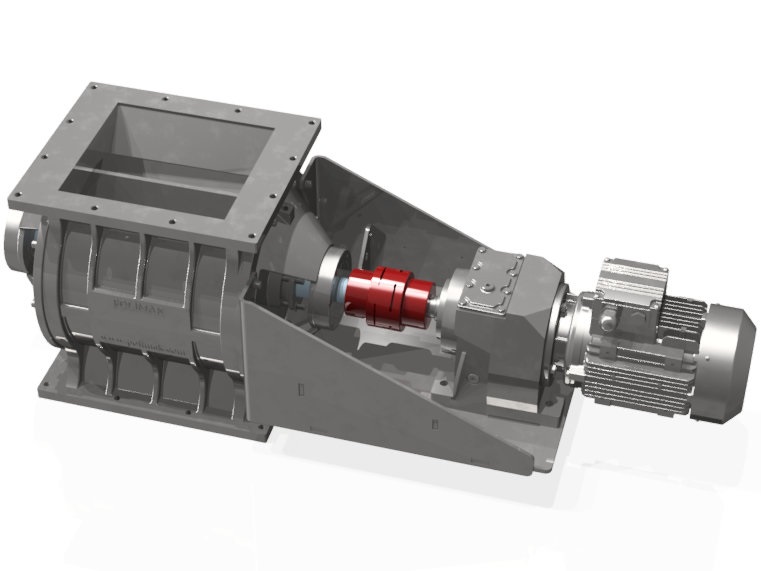
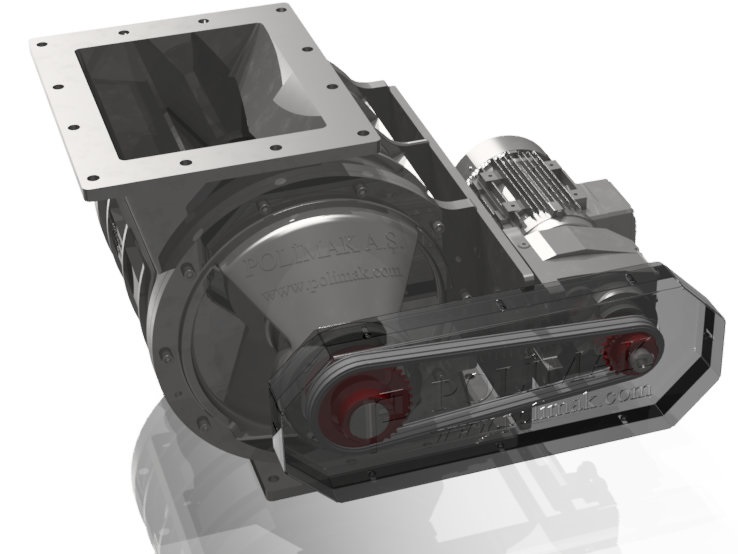
Rotary valve drive connections designed and manufactured by Polimak come in three different variations, the worm gear reducer connection, direct coupling connection and the chain drive connection. These drive connections are implemented to a rotary valve through a rotary valve rotor.

Worm Gear Reducer Drive Connection

A worm gear is the fundamental component of a worm gear reducer direct connection. It is a compact gearing equipment used for high motor speed reduction to produce low-speed output with high torque – hence the term ‘worm gear reducer’. The low-speed output is determined by the thread number on a worn and the number of teeth on a worm wheel. In other words, the output speed is based on the reduction ratio. Worm gears are used in various equipment including rotary valves. An electric drive motor and a worm gear reducer form a drive system (worm gear reducer drive) that is directly connected to a valve rotor shaft. This connection ensures reduced rotation of the rotor shaft inside the valve housing, thereby allowing smooth and controlled bulk material flow with the system.

Direct Coupling Drive Connection

The main component in a direct coupling drive connection is a coupling, also referred to as a shaft coupling. Shaft couplings are designed to transmit torque between a driving shaft and a driven shaft. They consist of two hubs, one fixed at the end of each rotating shaft. Torque is transmitted through these hubs. An electric drive motor and a driven machine (rotary valve) are directly connected using a shaft coupling. The coupling cannot reduce the motor’s rotating speed and for this reason, a worm gear reducer is used to ensure low-speed output. A direct coupling drive connection offers some of the following benefits; the absorption of mounting errors (shaft misalignment), vibration absorption during operation etc.

Chain Drive Connection

A chain drive is used for transmitting mechanical power from an electric drive motor to a driven shaft. It consists of a chain and two or more sprockets (two sprockets are typically used with rotary valves). The sprockets are attached to the drive motor shaft and the driven shaft (valve rotor shaft). The chain holes (pitches) fit over the sprocket teeth. Power is transmitted through the chain during operation. A worm gear reducer is used with chain drive connections because they cannot reduce the output rotating speed of a motor.

DRIVE CONNECTIONS FAQ

A drive system or sometimes called drive connection refers to a type of system or connection driving a machine during its operational duration.

A shaft coupling is a mechanical device that connects two rotating shafts for torque transmission from a driving shaft to a driven shaft.

A worm gear consists of a shaft with spiral threads known as a worm and a toothed wheel known as a worm wheel (spur gear). A worm gear reducer is formed when the threads of a worm perpendicularly align to fit the teeth of a worm wheel. Torque is applied to the gear assembly via a worm pinion. As an electric motor applies a rotation force to the assembly, the worm’s threads push against the teeth of the worm wheel causing it to rotate. The rotation of the worm wheel applies a torque to the driven which turns at a speed related to the reduction ratio of the gear assembly.

Rotary Valve Rotors

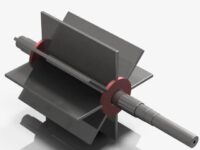
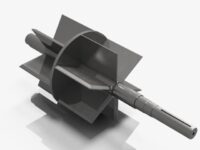
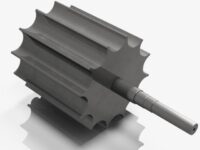
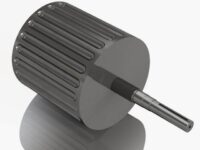
A rotary valve rotor is a rotating component of a rotary valve and is primarily used for controlling the bulk material flow from upstream equipment to downstream equipment. The rotation of the valve rotor is powered by a drive motor connected to it – various rotary valve drive connection are available.

Polimak offers two fundamental designs of rotary valve rotors (open end rotor and closed end rotor) commonly used in most industrial applications. We also render various rotary valve rotor types with modified features to help improve the performance during operation. The optimal rotor design is determined by the application, bulk material characteristics and feed rate. Proper selection of a valve rotor is crucial as it helps prevent premature wear, downtime, reduced efficiency and increased maintenance.

Rotary Valves Rotor Types

Open End Rotors

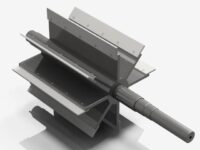
Open-end rotors are among the commonly used rotors in rotary valve configurations. Rotor pockets are open at each end hence the name open-end rotor. Dry bulk materials are contained on each end of the pocket by the valve housing. Open-end rotors are an ideal option for lighter bulk materials and are commonly used to handle dry bulk solids in food, pharmaceutical, pet food and chemical industries.

Closed End Rotors

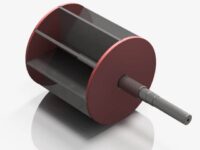
Closed-end rotors have discs also know as shrouds welded to each end of the rotor pockets. This prevents the blades from coming in direct contact with the endplates and helps reduce bearing contamination by offering better sealing in comparison to open-end rotors. Industries such as chemical, construction, plastic and other related bulk material handling industries.

Adjustable Tips Rotors

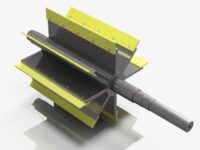
These rotor types are commonly used to handle abrasive dry bulk solids. The end of the blades have tips attached to them. Due to the characteristics of the handled bulk materials, the tips may wear out prematurely. Wearing out of the tips compromises the clearance between the valve housing and the rotor. The tips can be replaced easily to maintain optimal clearance between the housing and the blades. These rotors can be used in many industries including the construction industries.

Reduced Volume Rotors

Reduced volume rotors have reduced rotor pocket volume. The volumetric capacity of a rotary valve is decreased to match required throughput with a good degree of accuracy. If bulk materials flow too easily through a rotary valve, a downstream system may encounter challenges such as material clogging. Reduced volume rotors provide controlled bulk material flow in such instances. Pharmaceutical, chemical, food, construction and pet food are some of the industries where such rotors can be utilized.

Adjustable Polyurethane Tip Rotors

Similar to adjustable rotors, adjustable polyurethane rotors have replaceable tips. Flexible tip designs are used to handle large-sized and moderate abrasive dry bulk solids. These rotors are used to handle bulk solids such as plastic flakes, wood pellets, plastic pellets, plastic regrind etc.

Staggered Pocket Rotors

Staggered pocket rotors have rotor pockets arranged in an alternating manner (the pockets are not directly aligned). They offer continuous and smooth bulk material flow into downstream equipment. The name staggered is derived from the pocket misalignment. Staggered pocket rotors are widely used in construction, pharmaceutical, plastic and pet food industries.

Scalloped Rotors

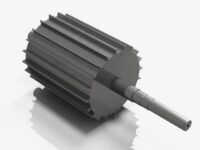
Instead of the V-shaped pockets, scalloped rotors have smooth U-shaped pockets that help with the discharge of sticky dry bulk materials and minimize material packing. Scalloped rotors are commonly utilized in food, chemical and pharmaceutical industries.

Metering Rotors

Metering rotors provide controlled bulk material feeding with high precision. They are commonly used for metering small quantities of dry bulk solids. Metering rotors are frequently used in food, chemical and pharmaceutical industries.

Rotary Valve Endplates

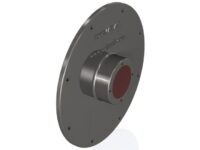
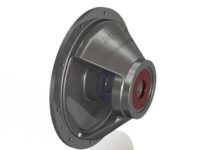
Endplates are precisely designed and manufactured to properly fit both ends of a valve housing, thereby acting as side covers of a housing. Endplates contain and prevent dry bulk solid leakage in the longitudinal direction of a rotary valve. A rotary valve endplate has a circular opening (hole) at its center that acts as a pathway for a rotor shaft which allows the rotation of a rotary valve rotor during operation. These plates fall into two categories based on their design configuration; inboard and outboard mounted bearings. They are sometimes referred to as housing cover plates. It is on these cover plates where bearings and seals are installed to allow smooth and leakage-free bulk solids handling.

ROTARY VALVE ENDPLATES CONFIGURATIONS

Inboard bearings

Inboard bearings allow smooth rotation of the rotor shaft through the housing cover plates. The bearings are fitted directly on the endplate. Inboard mounted bearings use is typically confined to low duty rotary valves where process handling characteristics are not complex. Due to their orientation, the bearings are at risk of getting contaminated and may not be suitable for use in higher temperatures.

Outboard Bearings

Outboard bearings also allow smooth rotation of the rotor shaft through the end-plates. These bearings are outboard fitted to the cover plates. Because of their orientation, outboard mounted bearings are not exposed to product contamination and may be suitable for use in heavy-duty rotary valves. They can accommodate a wide range of process handling characteristics and provide bearing protection.

Gland Packing Seals

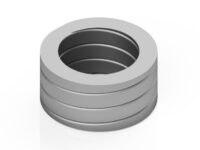
Gland packing seals are utilised to form an airtight seal around a rotor shaft. This seal prevents bulk materials from escaping/leaking as the rotor shaft rotates. The seal is inserted manually into the stuffing box and compressed using a gland follower. Multiple rows can be used depending on the application and handled material. It is the commonly used seal.

Lip Seals

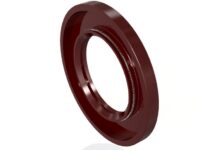
The primary function of lip seals is to keep away contaminants and retain lubricants. They also confine pressure. The nature of a seal is to function by maintaining proper contact with the rotating counterpart (rotor shaft). The sealing edge diameter is slightly lesser than the shaft diameter. The sealing lip (front face) is angled at the point of contact with the shaft to reduce friction. The garter spring helps maintain the pressure on the shaft.
INSIGHTS

Suggested Products

Explore our wide range of high-quality accessories for your bulk solids handling machinery.
Rotary Valve Accessories

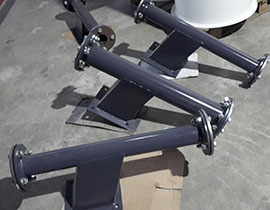
Polimak provides its customers with state-of-the-art accessories that help improve the already existing bulk solid handling equipment. Most of our accessories are available in different shapes and sizes so that their functions can be adopted to a wide range of equipment.

Discover our amazing products today

Discover our amazing products today
Join our newsletter to stay up to date on features and releases.

By subscribing you agree to with our Privacy Policy and provide consent to receive updates from our company.

© 2024 Polimak. All rights reserved. Design & Development by brain.work
Contact Us