INNOVATIVE

Rotary Valve

A rotary valve or an airlock feeder is a bulk material handling equipment used to modulate the flow of dry bulk solids from upstream equipment such as storage silos, hoppers and dust collection systems to downstream systems like pneumatic conveying systems, belt conveyors, and screw feeders. Polimak is an industrial company concerned with the design and production of various machinery used for handling dry bulk materials. With over four decades of experience in the bulk solids industry, our objective is to devise and produce cutting-edge bulk solids machinery that provide quality performance during bulk material handling for our clients.
Rotary valves are referred to by various names, with the term airlock valves being the commonly used one. Its primary function is to regulate bulk material flow from one piece of equipment to another and maintain a constant air pressure between the two ports of the valve (inlet and outlet). This is attained with the help of the rotor blades. Airlock valves are a fundamental component in bulk handling systems. They are widely used in many different industries such as food, chemical, plastics, cement, agriculture and many others for various bulk material handling processes.
QUALITY

Rotary Valves Features

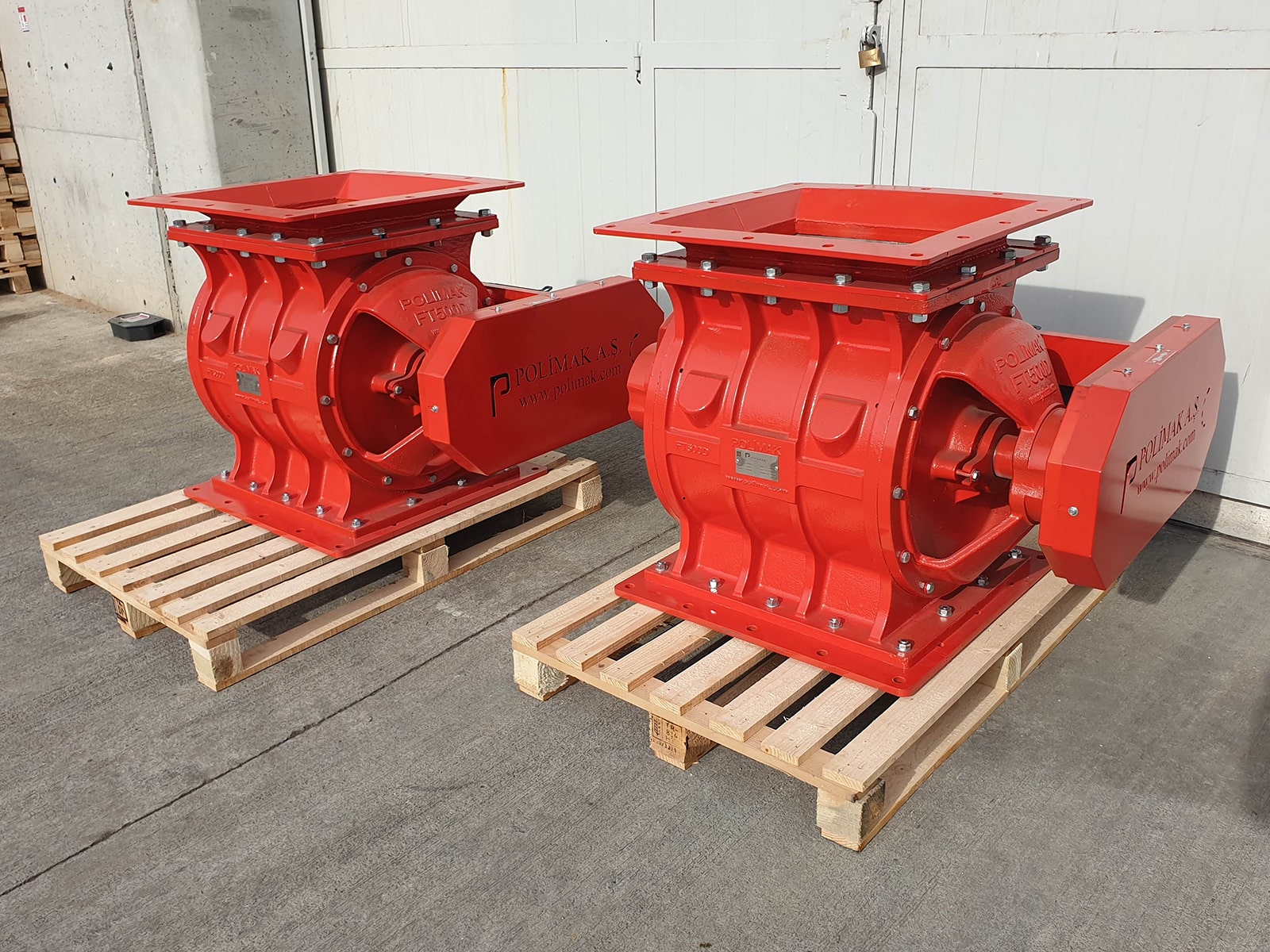
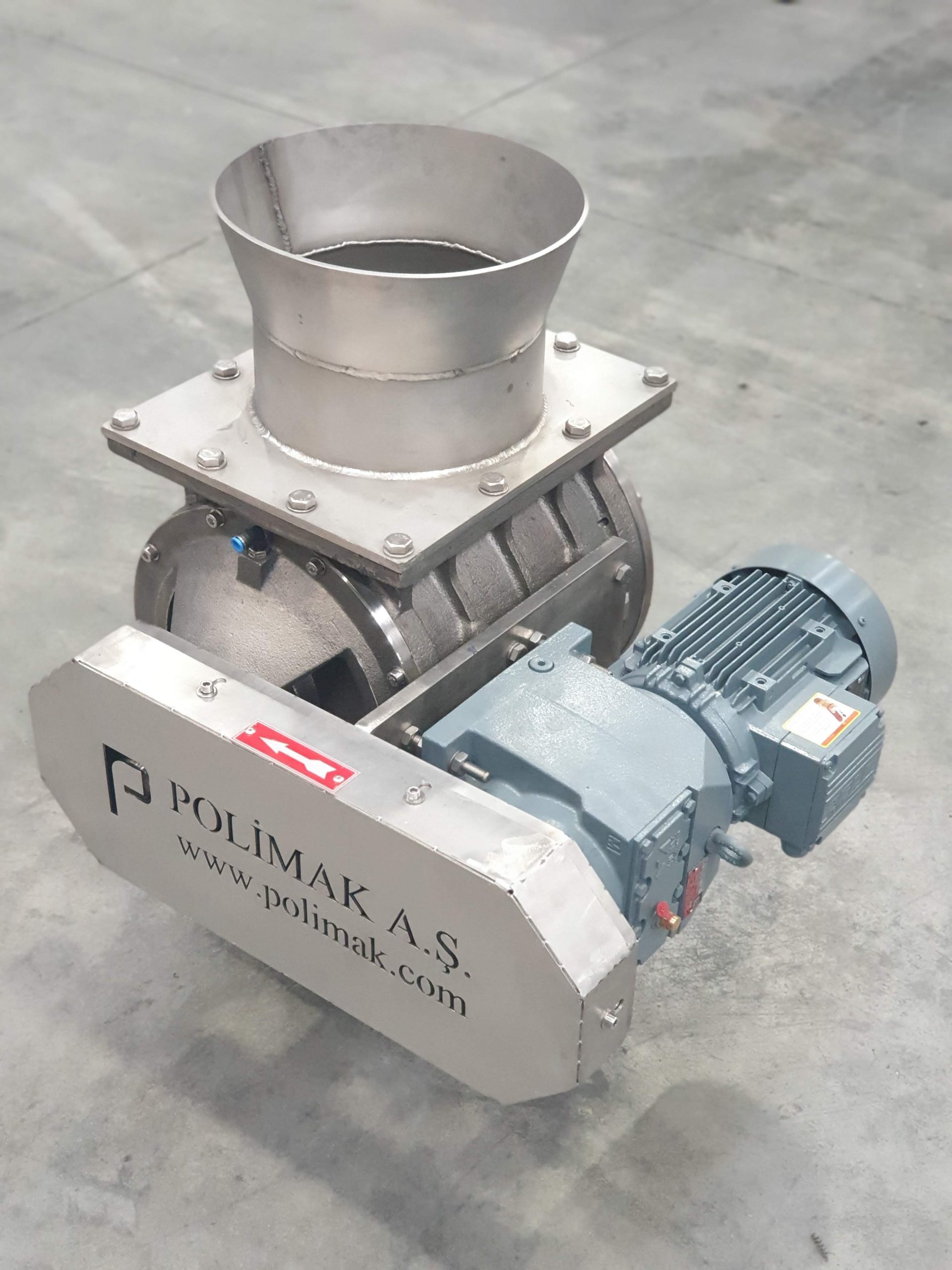
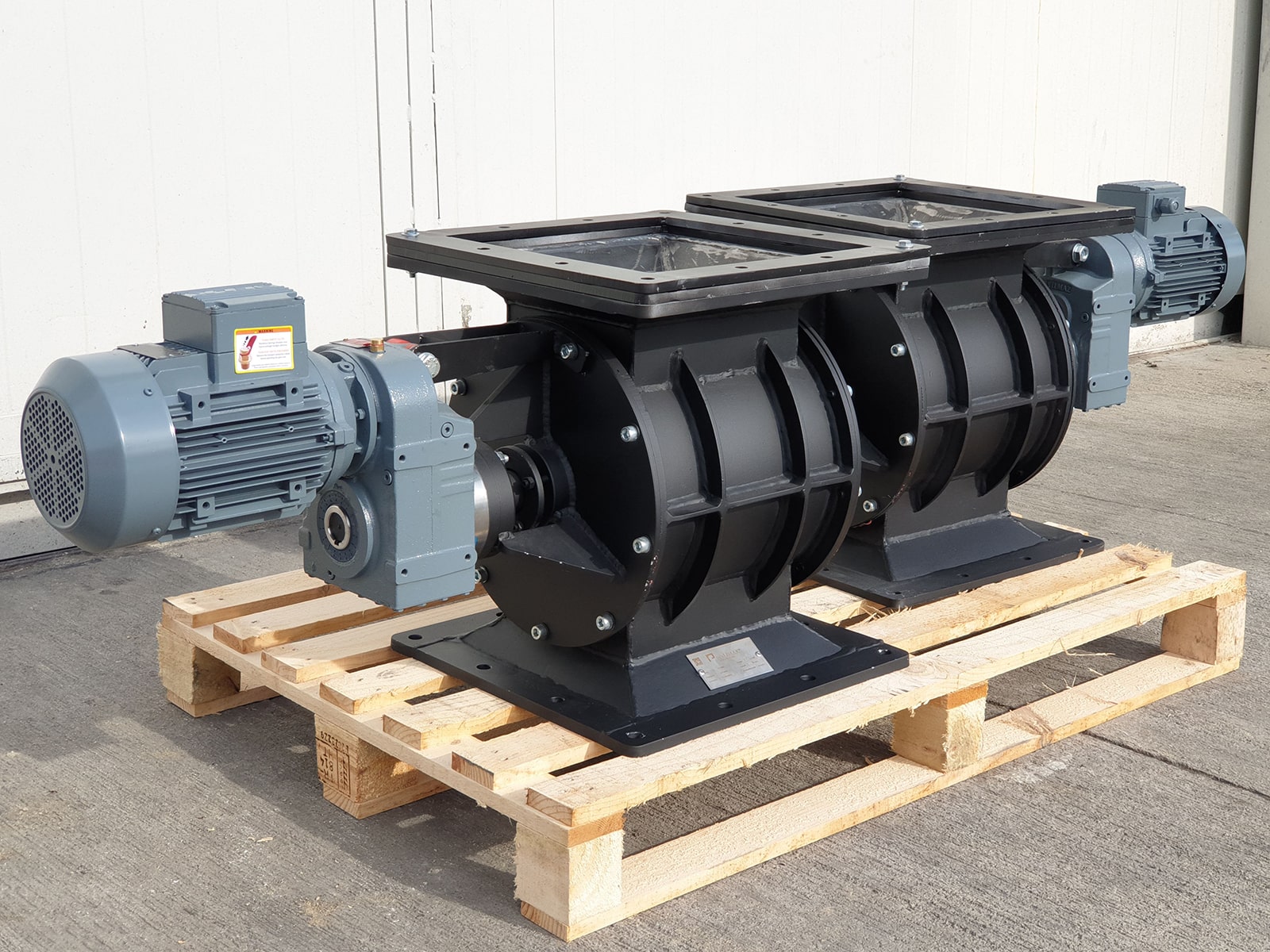
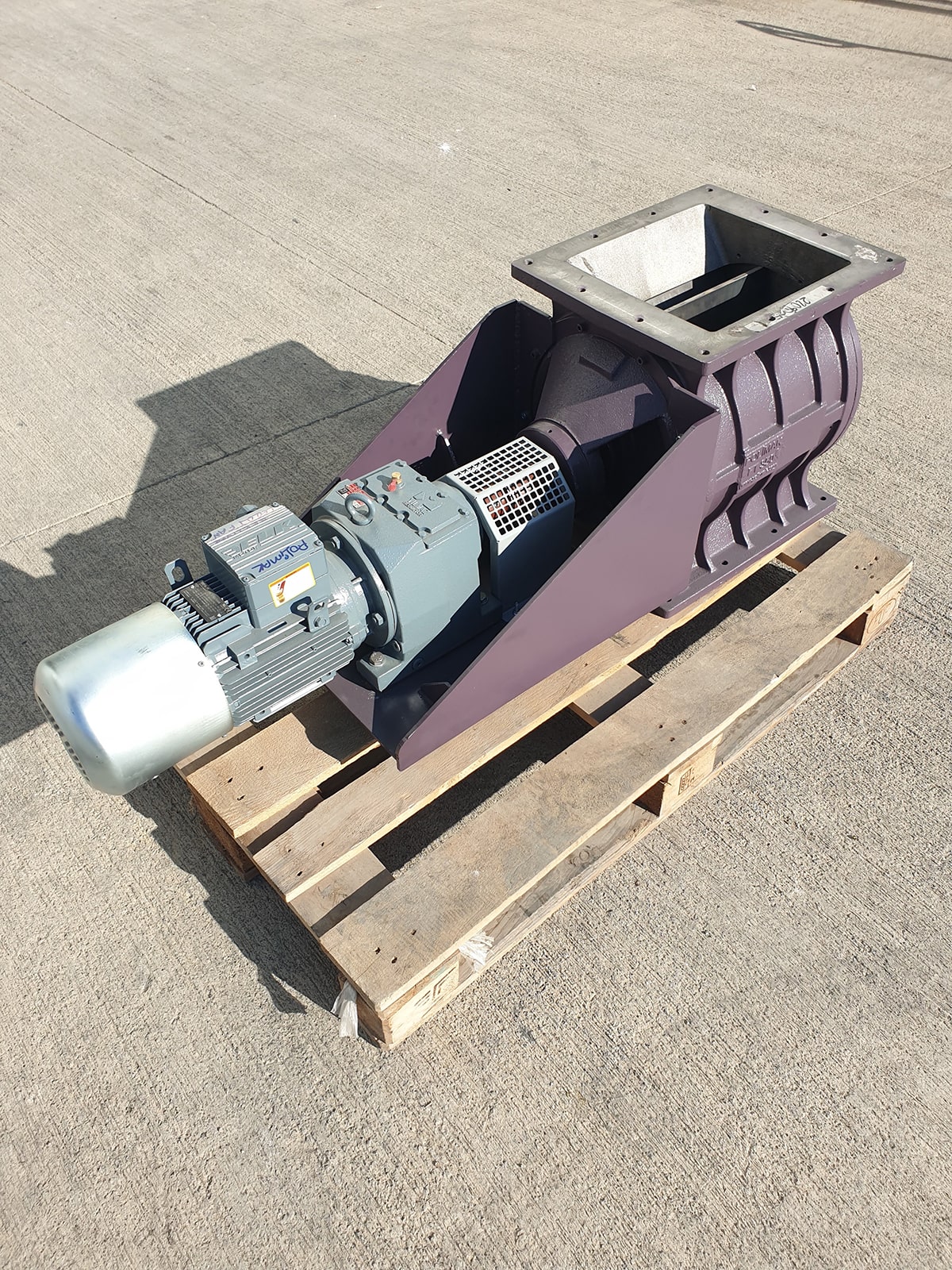
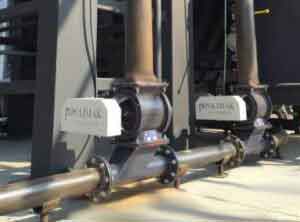
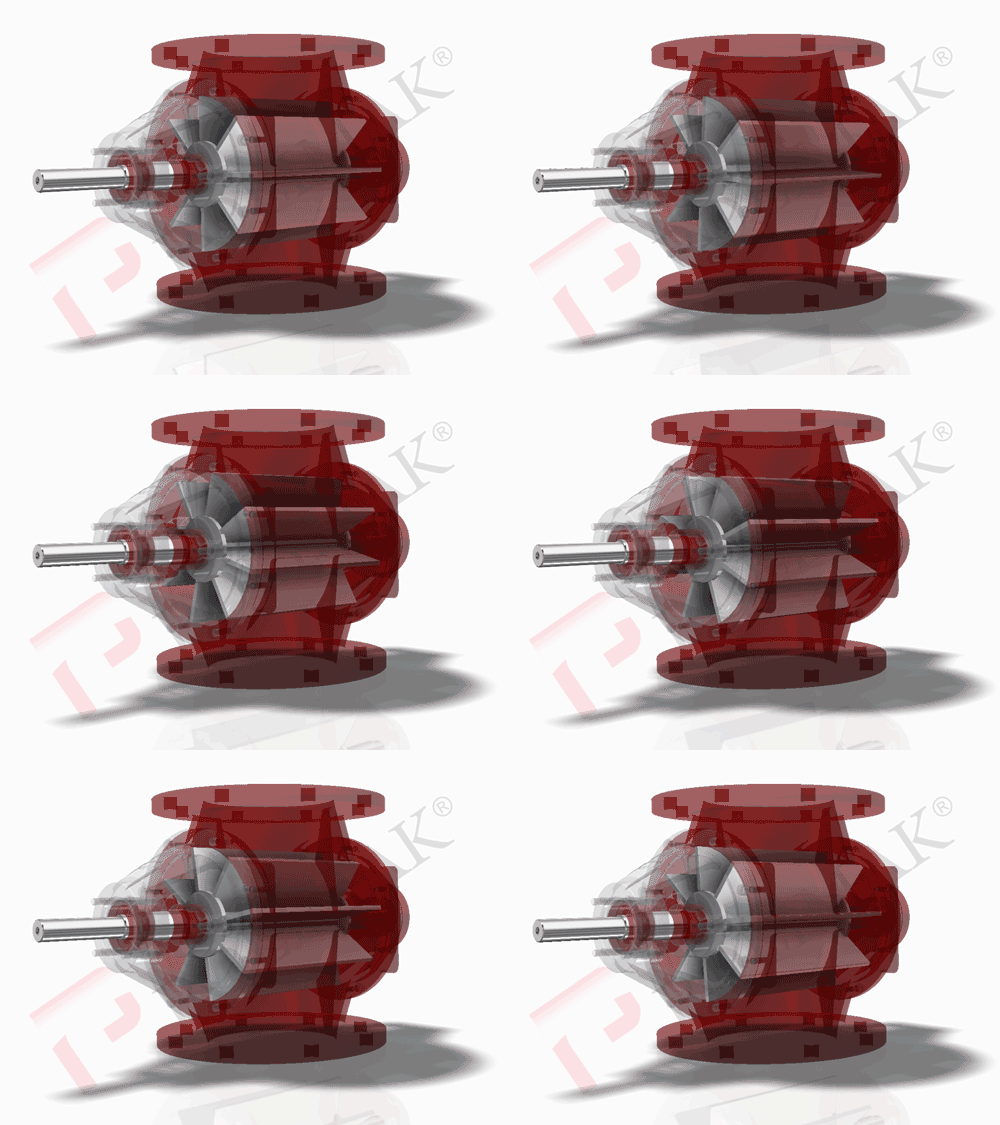
Polimak offers various valve configurations depending on the characteristics of the handled bulk materials and the application, respectively. The rotary valve production obeys general practical engineering precision. The fundamental valve components include a valve body (housing) with an inlet port and an outlet port, a rotor (shaft with blades), two end plates (outboard or inboard) and a drive system.

Housing

A rotary valve housing secures the bulk material flowing through it by containing it throughout the material handling. Our housings are produced from several materials of construction such as cast iron, stainless steel and hardox. We render special coatings for abrasive bulk materials as well as highly polished finishes for the food and dairy industries. The three housing configuration types present are flow through, blow through and offset.

Rotors

Rotors function as metering components in rotary valves. These components differ in design from each other. A rotor is also known as a rotor assembly since it is made up of a shaft and blades (also known as vanes) that are welded or cast together. It is the valve’s rotating component. Different rotors have different numbers of rotor vanes; 6, 8 and so on. The space between the vanes is known as a rotor pocket. The lower the number of rotor pockets the higher the pocket capacity.

End-plates

The rotary valve end-plates make sure that the bulk materials don’t spill off on the side of rotor pockets. There are two configuration types of end-plates namely outboard and inboard bearing end-plates. Bearings on outboard plates are moved away from the head plates and are typically used in heavy-duty rotary valve models. These plates contain seals in them. The primary purpose of the seals is to prevent dry bulk material outflow from rotor pockets to the bearing region. Lip seals or gland packing can be used.

Drive Systems

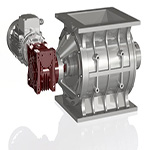
The motor and the gearbox combine to form what is known as the valve’s drive system. Most of the rotary valves are driven through a reduction gearbox that is powered by an electrically induced motor. The reduction gearbox is normally utilized to receive a specific motor speed and produce a low output speed. The three drive arrangements that Polimak offers are; a worm gear reduction connection, a chain gear connection and a direct coupling connection.

Rotary Valves FAQ

A rotary valve is a compact mechanical device broadly used in dry bulk materials handling applications to control the flow of dry bulk solids between two systems, upstream and downstream equipment. It is known by a variety of names, airlock valve, star valve, rotary feeder etc.

A rotary feeder a valve whose primary function is to feed or meter dry bulk solids from an upstream device to a downstream device without necessarily separating a pressure differential. An airlock feeder on the other hand is a valve that separates a pressure differential while feeding or metering dry bulk materials into a downstream system.

The blades of a rotary valve rotate inside the valves housing during operation. This rotation is driven by a motor. As the motor rotates, rotor pockets follow through. Dry bulk solids are supplied to the valve from upstream equipment through its inlet and settle in the pocket. The rotor continues to rotate and then discharges the dry bulk solids through its outlet port. Two types of rotation exist; load side rotation and return side rotation. The former is defined as the rotation of the rotor pockets from the inlet to the outlet, whereas the latter is the rotation of the rotor pockets from the outlet port to the inlet port.

Rotary valves are used in several industries for various industrial applications. It is used for several different reasons including; the control of dry bulk solids flows, feeding downstream systems, and maintaining a pressure differential between an upstream device and a downstream device.

Rotary Valves Photo Gallery

Rotary Valve Applications

Rotary Valves Industrial Applications

Rotary valves are an essential part of any industry that processes dry bulk solids. Our experience within the industry of producing bulk handling systems allows us to design and produce cutting-edge airlock feeders used in various industries like cement, food, chemical, mining, plastics, agriculture etc., for numerous applications. We have the experience to design and supply our customers with the right rotary valves to meet their requirements.


Where are rotary valves used?

Rotary valves are used to their fullest capacity in numerous bulk material handling industries. Some of the industries that make use of airlock feeders include the following:

Food Industry

The food industry is one of the fast-growing industries responsible for the manufacturing and processing of food for both human and animal consumption. Some of the processes involved in the food industry include coffee processing, sugar refining, corn milling etc. Polimak’s food-grade rotary valves constructed from stainless steel with no crevices are ideal for handling food products. Dry bulk food products such as milk powder, coffee powder, sugar, corn flour, cornstarch etc., are processed using food-grade rotary valves.

Agricultural Industry

The agricultural industry is one of the largest industry in the world responsible for crop production. It has played and continuous to play a vital role in economic growth and development. The agricultural industry benefits from the use of various bulk material handling systems including rotary feeders when processing bulk materials. Some of the dry bulks solids processed using rotary valves include wheat, barley, oat, rye, bran, chaff, chickpea, bean, lentil, soybean, sesame, rice, dried fruit, hazelnut, peanut, almond, sunflower seed, grain cereals etc. Standard rotary valves constructed from cast iron or carbon steel are used to handle bulk solids in granular form.

Plastics Industry

Plastic bulk raw materials in form of powder, granules and pellets are frequently processed in the plastic industry. Rotary valves are designed to render reliable performance during operations. The valve body and the valve rotor are precisely engineered to prevent bulk material shearing and jamming. Polymers such as polyvinyl chloride (PVC), polyethylene, polypropylene (PP), acrylonitrile butadiene styrene (ABS) and many other related plastics are some of the bulk materials handled using a rotary valve.

Chemical Industry

Pure and sensitive dry bulk materials necessitate proper design of bulk material handling systems such as rotary valve to prevent contamination. Regular cleaning and inspection is necessary to ensure problem-free operations. Rotary valve built from corrosion resistant material are used to handle various materials such as sodium bicarbonate (baking soda), calcium sulfate (gypsum), sodium chloride (table salt), zinc chloride, calcium carbonate, copper sulphate etc.

Mining Industry

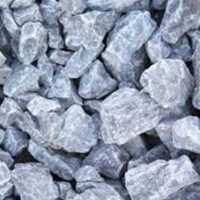
Raw materials such as limestone, quartz etc., mined from the Earth’s crust have to be processed before consumer use. In mining industries including cement, calcium carbonate (also known as calcite having a chemical formula CaCO3), lime etc. grinders are used to reduce feed material size in order to liberate minerals from barren rock. Rotary valves are used to handle the liberated minerals in a process line. Because of the nature of the materials in this industry, abrasion resistant material (like hardox) are used to build our rotary valves.

Power Industry

The generation of power (electricity) can be achieved by using fossil fuels like coal in internal combustion steam technologies. A by-product of coal combustion, fly ash, is transported from baghouse filters and ESP systems to bulk material storage systems like silos. Rotary valves can be used for discharging fly ash from the storage silos.

How are rotary valves used?

Rotary valves are used in many bulk material handling industries such as the aforementioned industries. Rotary valve industrial applications such as the discharge of dry bulk materials from upstream equipment to downstream equipment, help the user attain controlled material flow through the process line. Some of the rotary valve industrial applications include:

Bulk solids discharge from silos

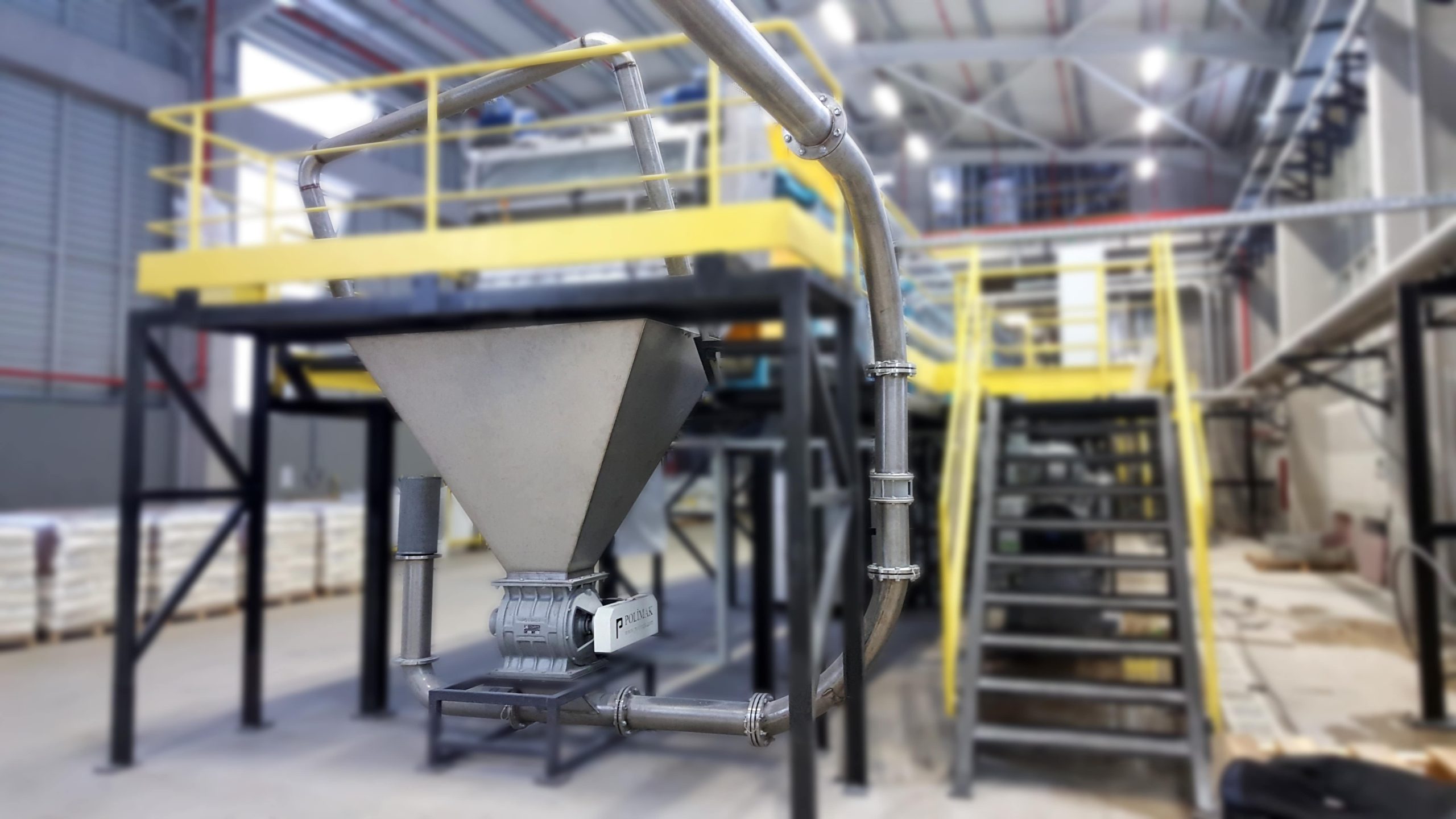
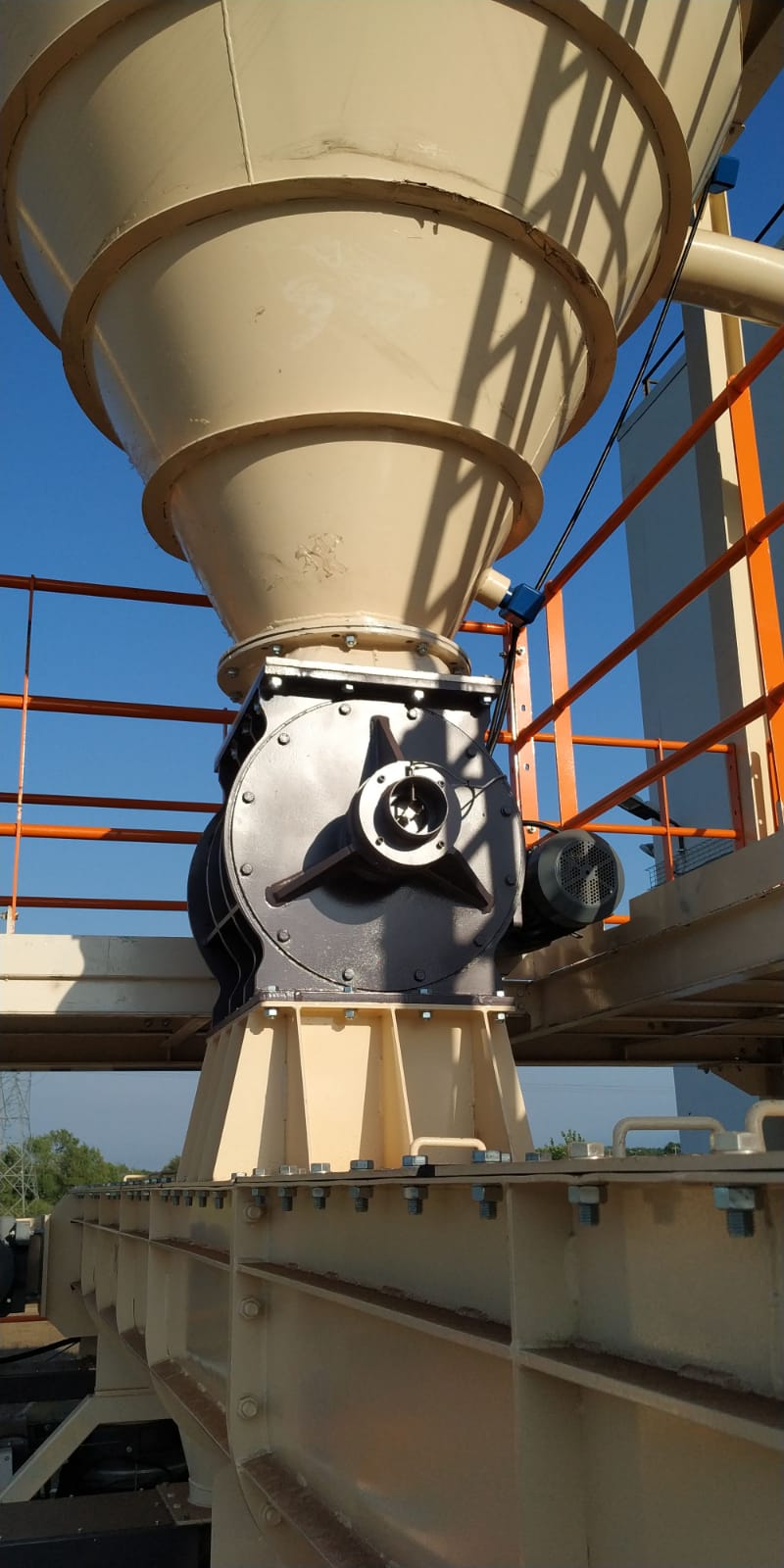
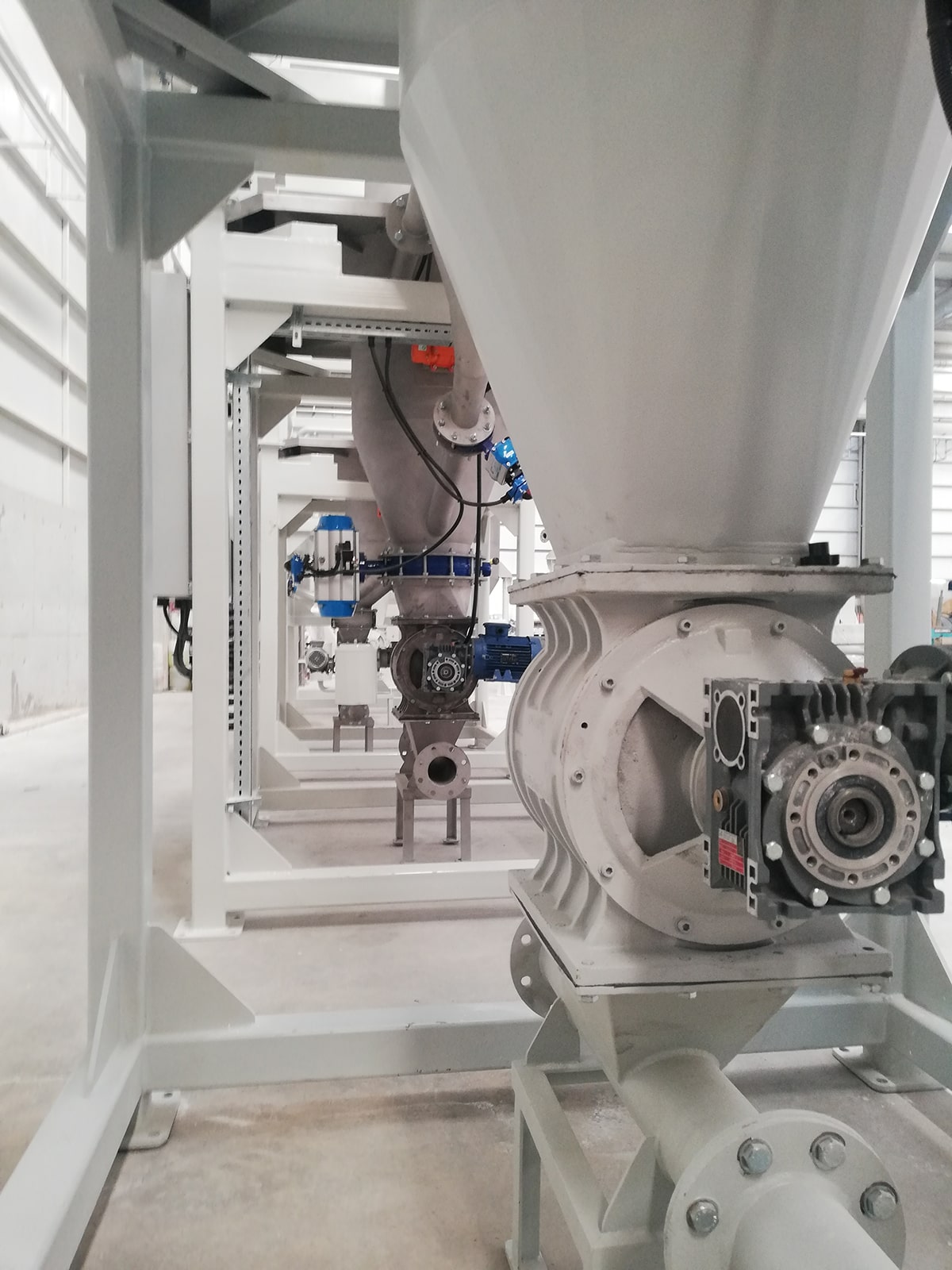
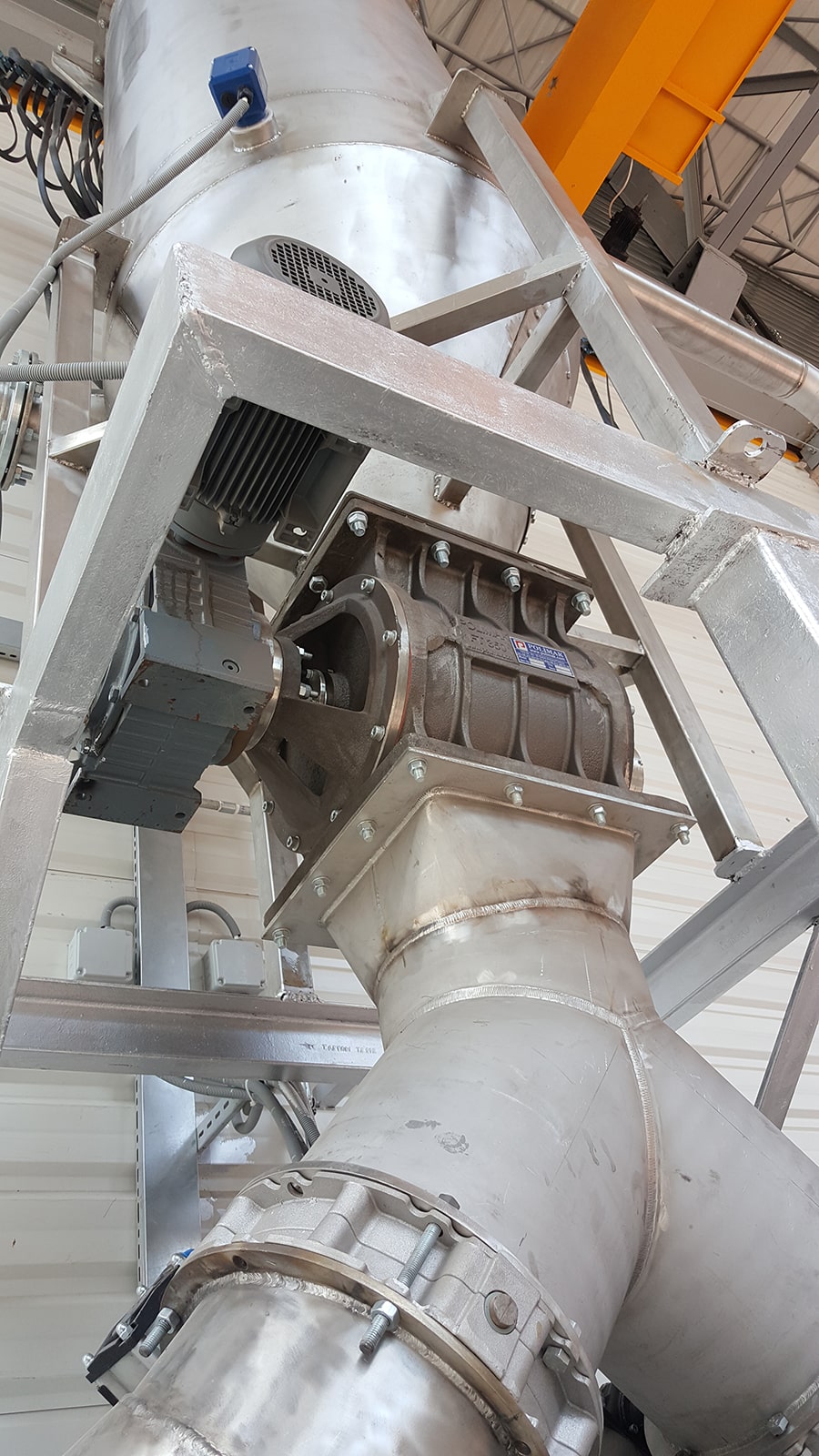
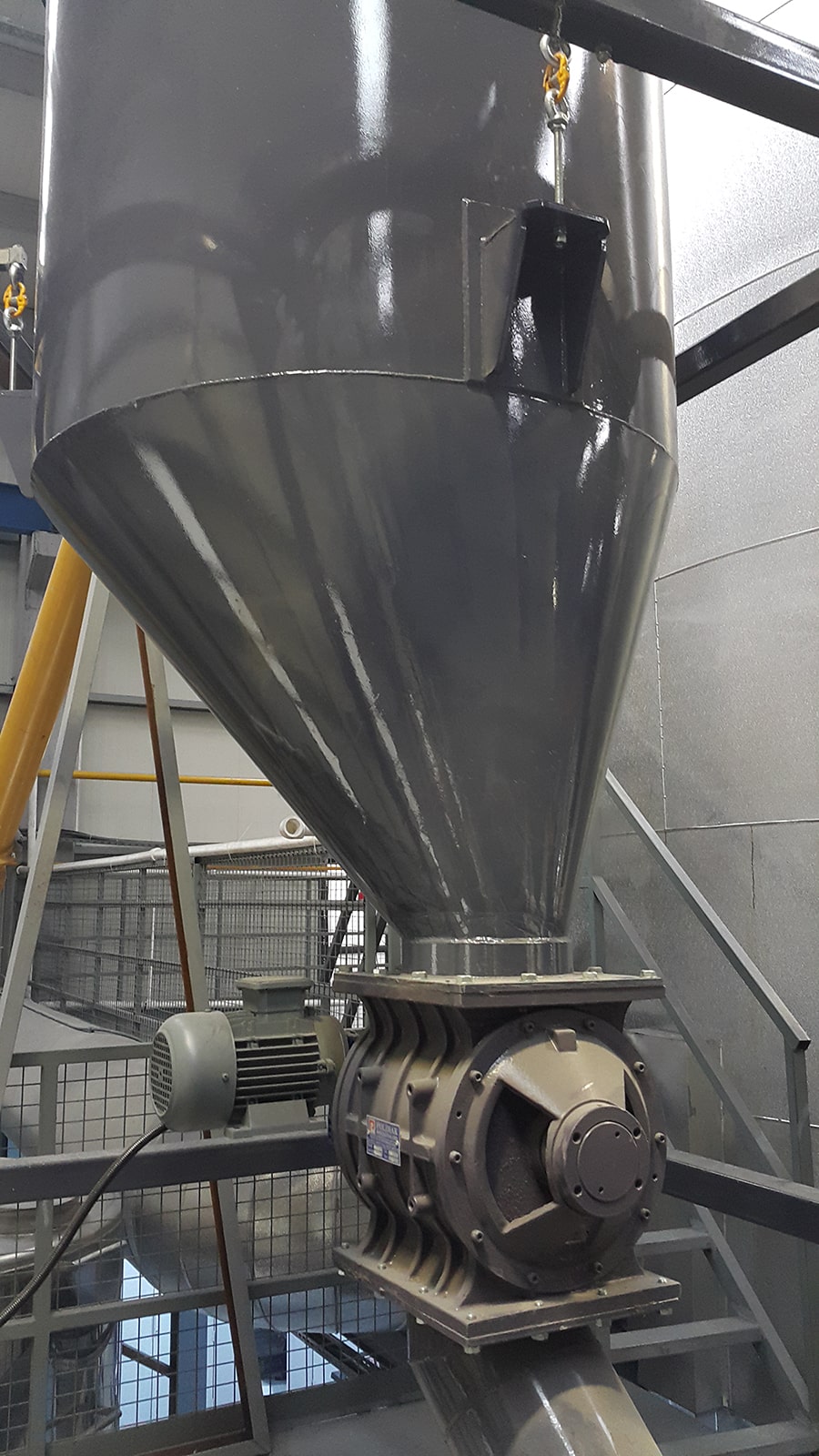
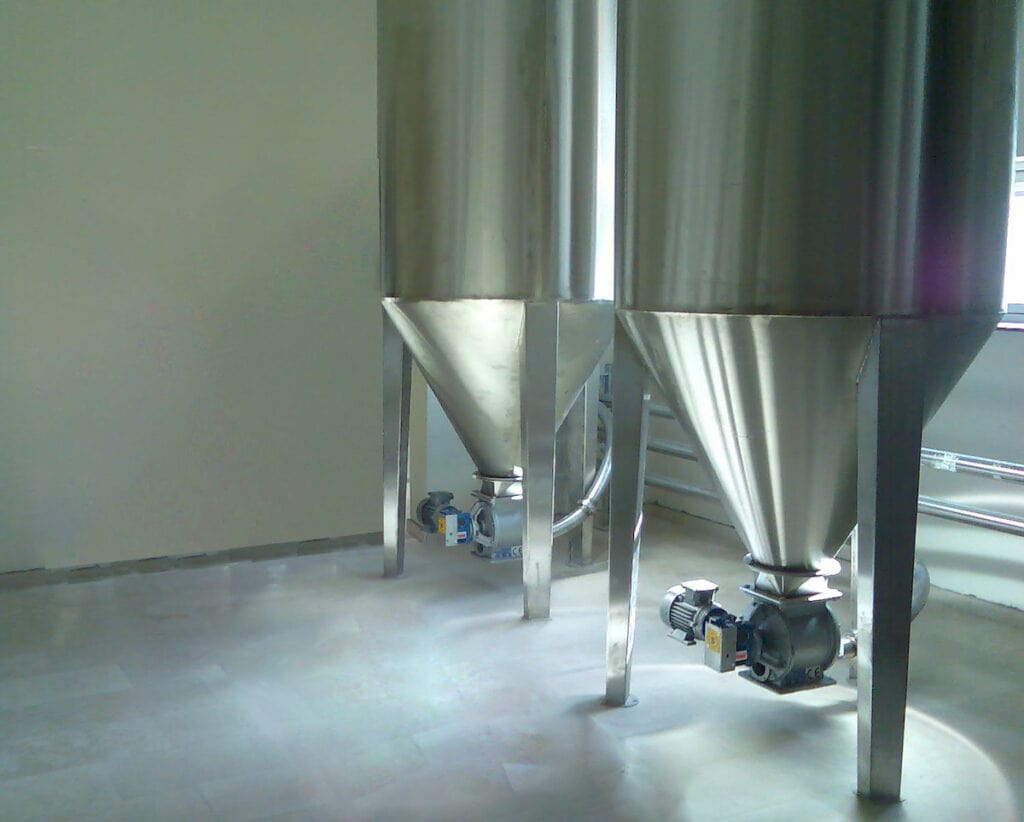
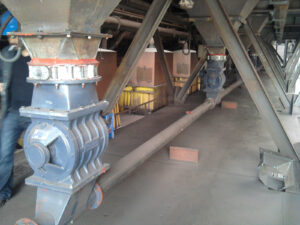
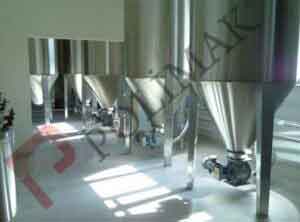
Rotary valves are widely used to discharge dry bulk solids from storage silos. The valve is mounted to the bottom of a storage silo cone (at the outlet port). It is used for controlled release of dry bulk materials to a piece of downstream equipment such as screw conveyors/feeders, conveyor belts, bins, pneumatic conveying systems etc. It can also be mounted to hoppers or other bulk containment systems.

Dust particles discharge from cyclones

Sometimes referred to as a centrifugal collector, a cyclone is a dust collection equipment that separates particulates from the air by centrifugal force. It causes an incoming airstream to spin in a vortex. As the airstream is caused to alter direction, the particulates’ inertia drives them in the original direction and causes them to separate from the airstream. The main vortex curls downwards carrying coarse particles while the inner vortex generated at the bottom of a cyclone curls upwards carrying with it fine dust. The rotary valve discharges the coarse dust particles that settle at the bottom of the cyclone.

Dust particles discharge from Baghouse dust collectors

A reverse jet collector is commonly referred to as a pulse jet collector. A pulse jet collector makes use of bags held from a metal cage that is fastened to a tube sheet at the top of a collector. Dust enters the collector and its particles deposit on the outside of the bags. The deposits are cleaned by short periodic bursts of compressed air injected into the bags. These bursts cause flexing of the bags which result in dust particles breaking and falling of the bags. The particles settle at the bottom where they are discharged by an airlock valve. The airlock minimises the need for downtime in a process line and reduces operator intervention.

Bulk solids processing equipment feeding and discharging

Most bulk industries necessitate additional equipment for controlled feeding and discharging of the handled dry bulk materials. Machines such as ball mills, pin mills, cone mills, hoppers, convey systems and many others require a steady rate of material flow to operate effectively. Rotary valves can be used with such equipment to feed or discharge bulk materials in an effective and controlled manner.

Feeding pneumatic conveying systems

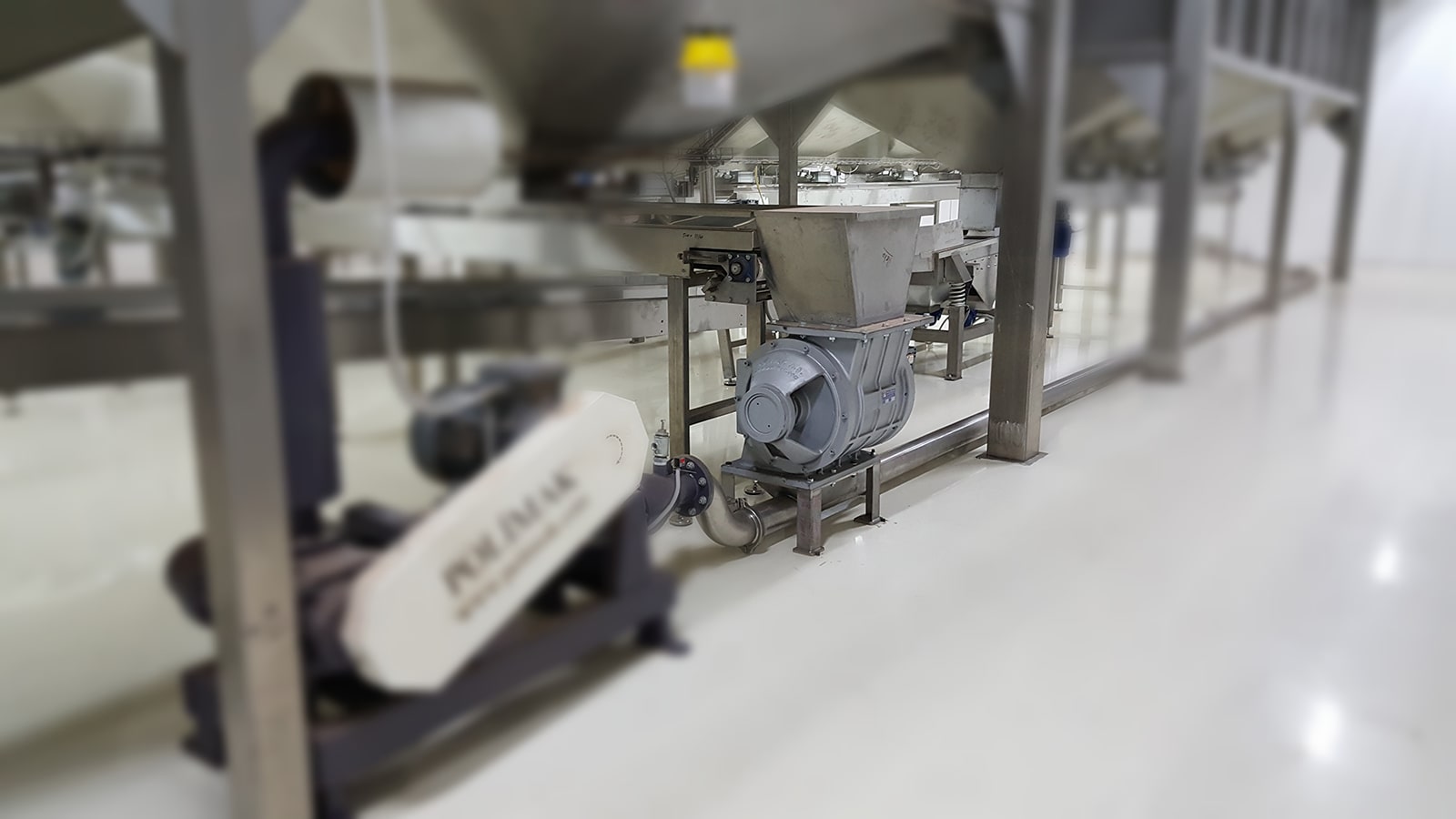
Rotary airlock feeders are used to feed dry bulk materials to conveying lines from upstream devices such as storage silos or hoppers. They prevent air leakage while maintaining constant feeding of dry bulk materials.

Handling large-sized bulk materials

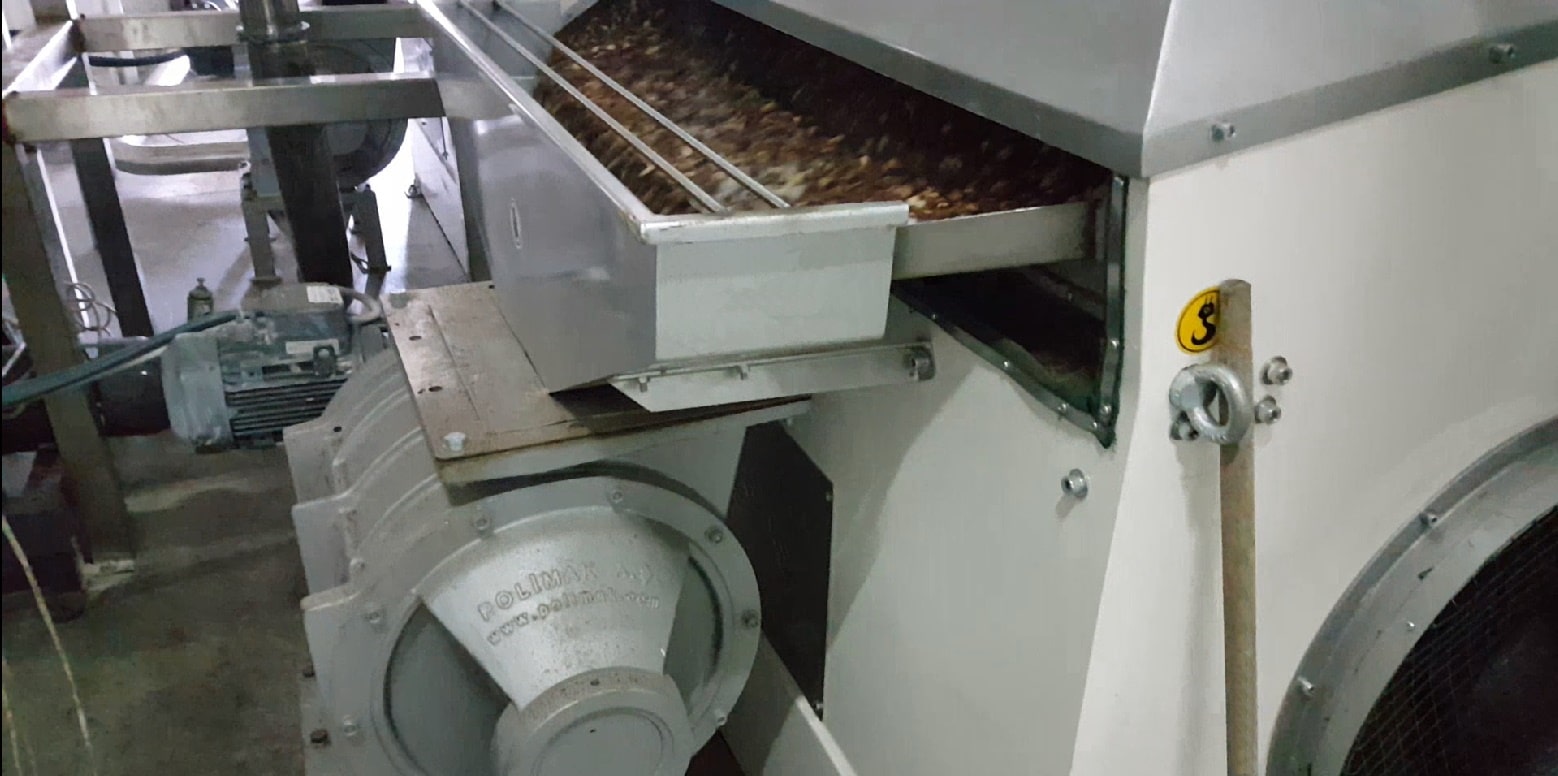
Polimak produces quality rotary valves for smoothly handling large-sized dry bulk solids such as chickpeas, broad beans, hazelnuts. Our valves offer safe and efficient bulk handling with 0.1% harm guaranteed.

Which bulk materials can be handled with a rotary valve?

Rotary valves are used to handle a wide range of dry bulk materials. Depending on the characteristics of dry bulk materials being processed, rotary feeders can be manufactured from stainless steel, carbon steel or hardox steel. Some of the bulk materials that can be handled using a rotary valve are sugar, salt, spices, wheat, rice, cornstarch, corn (maize), bran, coffee beans, broad beans, milk powder, coffee powder, wheat flour, cornstarch, plastic pellets, rubber powder, cement, fly ash, sand, alumina, copper oxide, sodium sulphate, calcium carbonate, limestone etc.

Bulk Materials Handled by Rotary Valves

A rotary valve is designed according to the dry bulk materials which it is processing. Different types of dry bulk solids demand different valve designs. Coated surfaces that are non-stick or polished stainless-steel surfaces are commonly used for products having corrosive, sticky, and cohesive characteristics.

Some of the bulk materials that can be handled using a rotary valve are sugar, salt, spices, wheat, rice, cornstarch, corn (maize), bran, coffee beans, broad beans, milk powder, coffee powder, wheat flour, cornstarch, plastic pellets, rubber powder, cement, fly ash, sand, alumina, copper oxide, sodium sulphate, calcium carbonate, limestone etc.

Handled Bulk Materials by a Rotary Valve

Food

The processing of most food products is fairly easy hence the basic valve design can be used without compromising the product. Foods such as salt, sugar, baking soda, wheat, rolled oats, rice, dry beans, dried corn etc. that contain preserving or sterilizing agents and do not pose any corrosion risks can be processed by a standard constructed valve. On the other hand, foods such as fatty milk powder, and infant food products have a high degree of sensitivity and require the use of a properly configured valve. The configurations include stainless-steel with a polished internal surface. The dairy sector also makes use of the properly configured rotor valve significantly. The valve is responsible for material movement whilst maintaining sanitary surroundings. The valve is designed to keep away from bacteriological contamination.

Biomass

This industry needs a valve that can simultaneously withstand the material’s hostility and maintain proper functionality. The valve serves two main purposes, (i) to behave like a lock – prevention of fire and gas reflux. (ii) to behave as a feeder – feeding the biomass to the pneumatic conveying line that conveys the biomass to the burning chamber. Thanks to the advanced geometry of the valve, large sized biomass particles of up to 50mm can be fed to the conveying line. The valves can be manufactured from carbon steel or cast iron. Further enhancements for durability are possible by means of coating.

Foundry

Steel, aluminum, cast iron, bronze, and brass are some of the common raw materials used in many industries. Foundries are places that generate a high amount of dust. Metal melting and casting are the primary sources of dust emission. Dust collection systems are used to provide a safer environment. The dust is carried from the source by a suction tube attached to the dust collector with the hopper at the bottom. The hopper is fitted at the bottom with a rotary valve for continued release of dust. The dust enters the dust collector, and the heavy particles fall down to the hopper due to the baffle plates used in the system, then exits via the rotary valve into the bin.

Chemical

Similar to the processing of infant foods in the food industry, the valve used in the chemical industry must be corrosion resistant, easy to clean, and able to withstand harsh environments. This industry involves the movement of delicate and pure chemicals whose purity cannot be imperiled. Hiccups must be avoided at all costs because of the nature of the industry.

Aggregate and Mining

Just as the name ‘aggregate’ entails, this industry is responsible for the manufacturing of building materials such as materials driven from the Earth’s core (sand, asphalt, cement, sandstone, garnet, ceramic, silicon carbide, slag etc.). Due to the nature of the industry, the valve must be solid to put up with the materials roughness and toughness. The prime function is to convey the material from an inlet down through its desired point of work. The valve must have the following characteristics; abrasion resistant, Hardox rotor and housing, and coated internal surface with tungsten carbide or hard chrome. This particular valve is not only used in this industry, but also in asphalt, cement, coal, and mining industries just to mention a few.

Agriculture

This is one of the industries that immensely makes use of the rotary feeder. The rotary valve is used mostly for handling grains. The grains are supplied to the valve, then the valve discharges the grains to the conveying pipeline. Properly selected rotary valves provide good service without harming handled product.

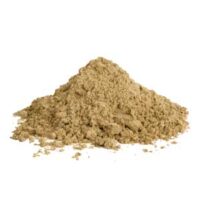
Other bulk materials handled include cement, calcite, ash, glass powder, marble powder, plastic pellets, sawdust, fly ash, coal, coal dust, wheat, flour, barley, feed, seed, corn, chickpea, bean, soybean, sesame, rice, rice flour, dried fruit, nuts, peanut, almond, sunflower seed, cotton seed, grain cereals, chestnut, coffee grain, coffee powder, sugar, salt, spice.

Starch
Sugar
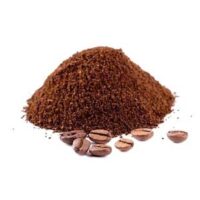
Coffee powder
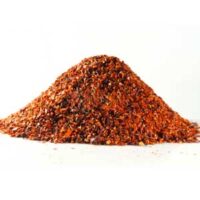
Spices
Sodium sulphate
Sand
Limestone
Copper oxide
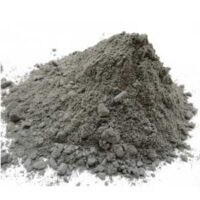
Cement
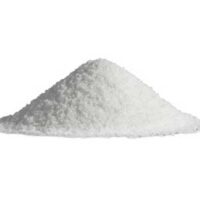
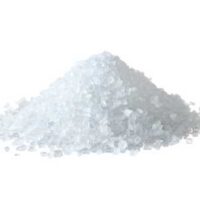
Salt
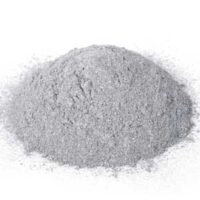
Alumina
Calcium carbonate

ATEX Certified Rotary Valve

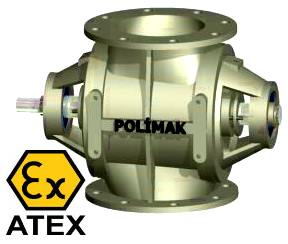
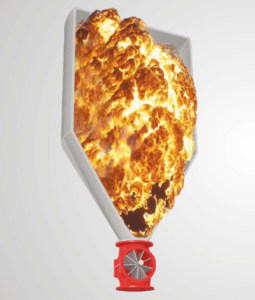
ATEX certified rotary valves play an important role in bulk material handling industries that process combustible dry bulk materials. They are used to help reduce or isolate explosion propagation in instances where a combustible cloud ignites. Polimak’s ATEX rotary valves are certified with 10 bar explosion tests.

An ATEX certified rotary valve does not cause a risk for explosion, hence it is an ideal choice for explosive zones. All rotary valve components such as rotary valve rotors, rotary valve endplates etc., comply with ATEX regulations and provide ex-proof characteristics. An ATEX certified airlock valve can be used in the food industry and many other industries that handle combustible dry bulk solids.


Explosion isolation and flame proof

In a case where a dust cloud ignite during material handling, there are various ways of stopping a flame from spreading throughout a production line. One of the way to do so is by using isolation the flame by using ATEX certified equipment – rotary valves. They designed in such a way that they can stop a flame wave and resist or reduce the explosion pressure impact. This is commonly referred to as flame resistance and explosion isolation. Coal powder, sugar powder and flour are some examples of combustible bulk materials. For a rotary valve to be used in industrial sectors that handle inflammable bulk materials, the rotary valve must be ATEX certified.
ATEX zone classification

Industries are to classify the areas of the explosive atmospheres into zones according to the ATEX directive. The probability of the explosion developing and how long it will persist if developed, determines the location, size, and classification of the zone. The zone classification for hazardous clouds of dust and fibers are;
ZONE 20

This is an explosive atmosphere with a combustible dust cloud that is likely to ignite frequently and extensively.

ZONE 21

This is an explosive atmosphere containing a combustible cloud that ignites less frequently and less extensively compared to that of Zone 20.

ZONE 22

In this zone, the explosive atmosphere contains a combustible dust cloud that ignites less frequently than in the aforementioned zones and occurs for a short period.

For the ones that involve hazardous gas, mist or vapor, the zones can be classified as follows.

ZONE 0

This comprises areas where an explosive atmosphere containing dangerous gas, vapor or mist may combust frequently for an extended period.

ZONE 1

This includes areas where the explosive atmosphere with hazardous vapor, mist or gas is likely to combust less frequently and less extensive compared to the effects in Zone 0.

ZONE 2

An explosive atmosphere containing gas, vapor or mist that ignites less frequently and occurs for a short period compared to Zones 0 and 1.

INSIGHTS

Suggested Products

Explore our wide range of high-quality accessories for your bulk solids handling machinery.
Rotary Valve Models

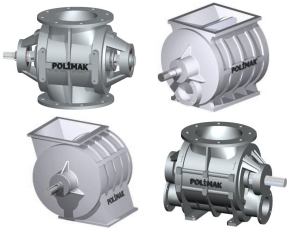
Wide range of rotary valve models and configurations are available for different process conditions and physical properties of transferred bulk solids. According to process (silo, cyclone, jet filter, conveyor, pneumatic conveying system etc.); according to bulk material (fine powder, granule, abrasive, elastic, high temperature etc.)

Rotary Valve Accessories

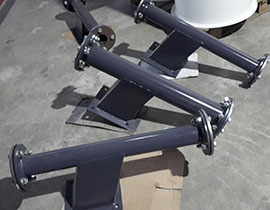
Polimak provides its customers with state-of-the-art accessories that help improve the already existing bulk solid handling equipment. Most of our accessories are available in different shapes and sizes so that their functions can be adopted to a wide range of equipment.

LATEST

Related Case Studies

Stay updated with our informative blog posts.
1 min read
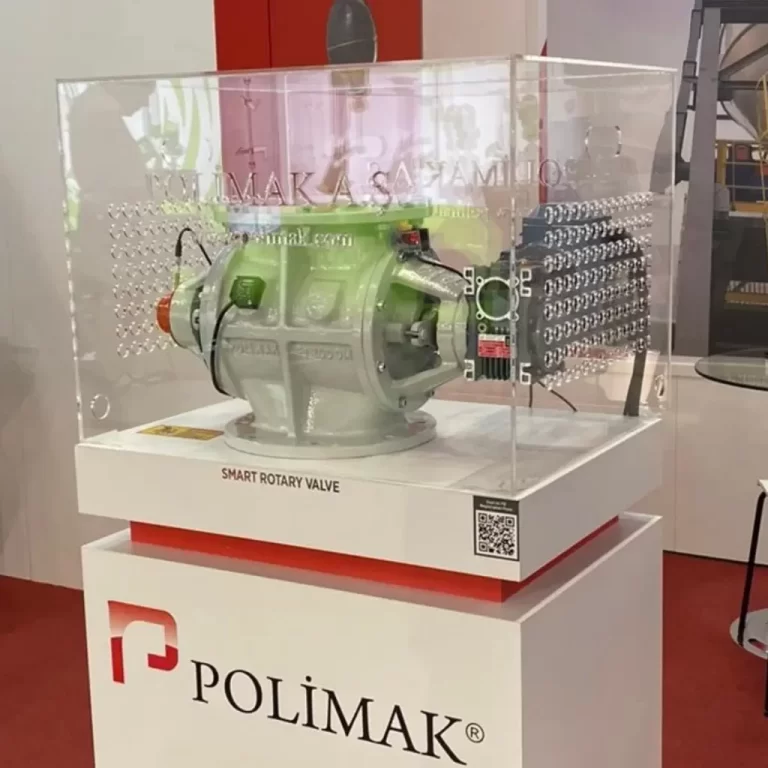
Polimak Smart Rotary Feeder

Process and manufacturing industries such as cement, agriculture, food, chemicals, plastics and many others rely on rotary feeders to facilitate efficient bulk material flow. Facilitating efficient bulk material flow requires uninterrupted operations, unfortunately, operational issues can arise.

Discover our amazing products today

Discover our amazing products today
Join our newsletter to stay up to date on features and releases.

By subscribing you agree to with our Privacy Policy and provide consent to receive updates from our company.

© 2024 Polimak. All rights reserved. Design & Development by brain.work
Contact Us